Proudly serving Phoenix, Scottsdale, Mesa, Chandler, Gilbert, Tempe & surrounding areasCall or Text 24/7: 480-264-9663
Aerial view of a residential neighborhood with saguaros and desert foothills in Phoenix, AZ.

Phoenix Epoxy Co.: Garage Floor Epoxy, Garage Floor Coatings, Polyaspartic Floor Coatings in Phoenix, AZ

Phoenix Epoxy Co. installs garage floor epoxy, garage floor coatings, and polyaspartic floor coatings for homes and businesses across the Salt River Valley. Our services also include decorative flake and metallic epoxy, commercial and industrial flooring, residential coatings, concrete polishing, concrete staining, and grind and seal systems. We tailor each recommendation to Phoenix slab conditions, including Sonoran Desert heat, UV exposure, and monsoon humidity swings.

Phoenix garage slabs can climb past 140°F, while intense sun and seasonal humidity changes challenge coatings that were not selected for desert conditions. Our crews inspect existing coatings, map cracks, mechanically prepare the concrete, and test moisture levels before recommending a system. We operate under Arizona Registrar of Contractors licensing requirements, follow ICRI surface preparation guidelines and ACI concrete standards, and carry general liability insurance and bonding.

We use manufacturer-certified materials and provide project documentation with floor-care guidance. Request a free on-site epoxy estimate for a slab assessment and a project-specific price instead of a phone quote.

★ ★ ★ ★ ★4.9/5 Average Rating · 20+ Years of Experience · Thousands of Customers Helped · Licensed & Insured · Residential & Commercial

Phoenix Flooring Credentials

Free On-Site Estimate
Licensed, Bonded & Insured
ICRI & ACI Guidelines
Phoenix & Maricopa County
Concrete Coating Options

Epoxy Flooring Services in Phoenix

Choose a coating or concrete finish around the slab condition, traffic, sunlight, design goals, and return-to-service needs. We source professional epoxy and polyaspartic products through established Phoenix supplier channels, then recommend the system after moisture testing, crack mapping, and an existing-coating review.

Garage Floor Epoxy

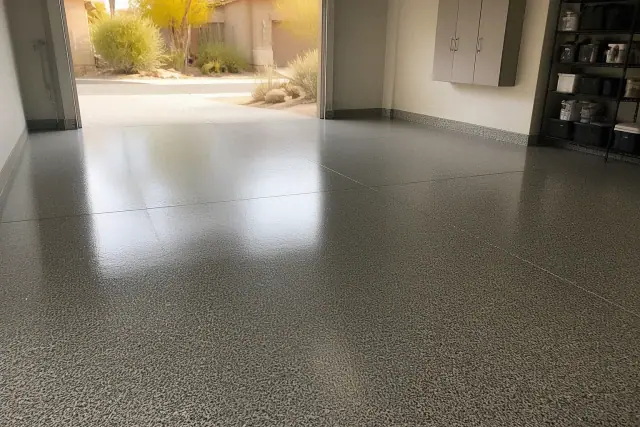
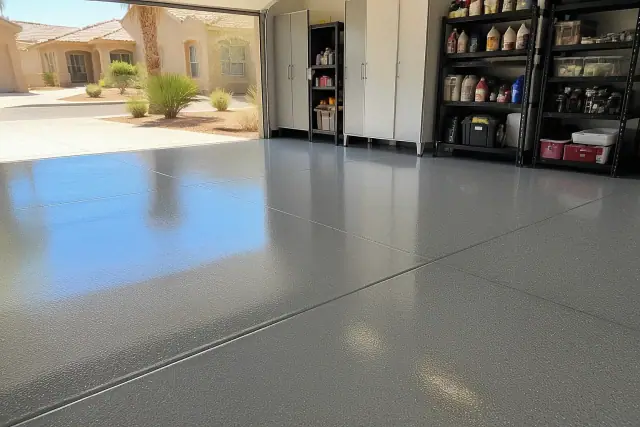
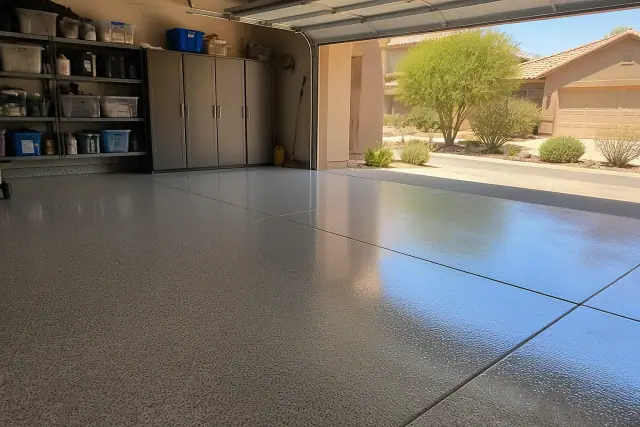
High-gloss epoxy garage floor in a residential home in Phoenix, AZ, with storage cabinets and desert landscaping visible.

A typical installation includes diamond grinding or shot blasting, crack fill, a moisture barrier when testing calls for it, primer, color base, and a protective topcoat. Most two-car garages of roughly 400-500 square feet finish in one to two working days with a quick-cure epoxy or polyaspartic system.

Explore Service
Garage Floor Coatings

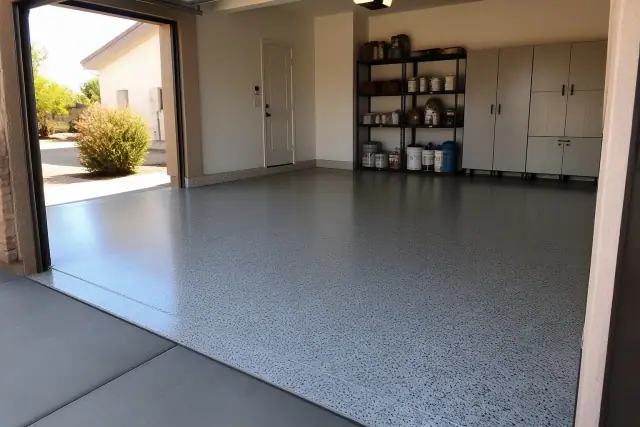
Residential garage with a smooth resin floor coating and storage cabinets in Phoenix, AZ.

Garage coatings resist hot-tire pickup, oil, brake fluid, stains, and de-icing salts tracked home from mountain trips. Choose glossy, satin, or matte finishes, with slip-resistant additives available for garages that also serve as workshops.

Explore Service

Polyaspartic Floor Coatings

Completed polyaspartic floor coating in a residential garage in Phoenix, AZ.

Polyaspartic coatings provide faster curing and stronger UV stability than standard epoxy, making them useful near garage doors exposed to Arizona sun. Many systems pair an epoxy base for build and adhesion with a polyaspartic topcoat for abrasion resistance, color retention, and quicker return to service.

Explore Service

Epoxy Flake Flooring

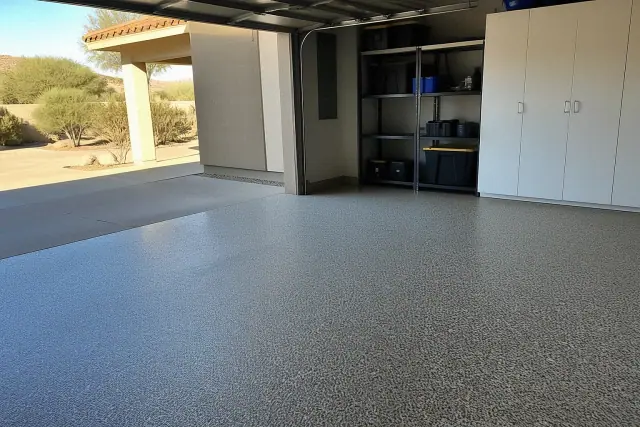
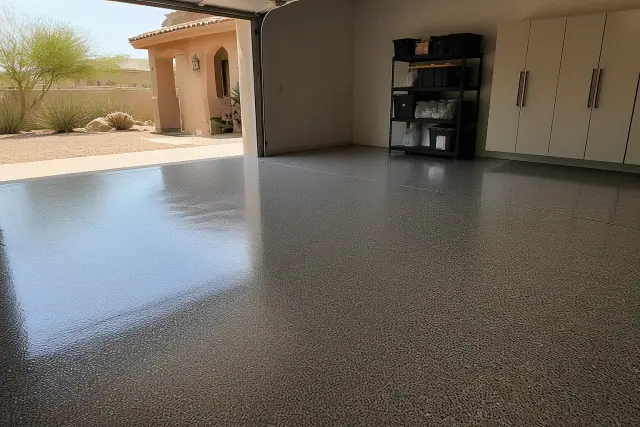
Epoxy flake flooring installed in a residential garage in Phoenix, AZ, with desert landscape visible through the doorway.

Colored vinyl chips broadcast into the base coat add texture, slip resistance, and visual coverage for minor slab imperfections. Select full-broadcast flake with 100% coverage or an accent-broadcast blend, sealed beneath a clear epoxy or polyaspartic topcoat.

Metallic Epoxy Flooring

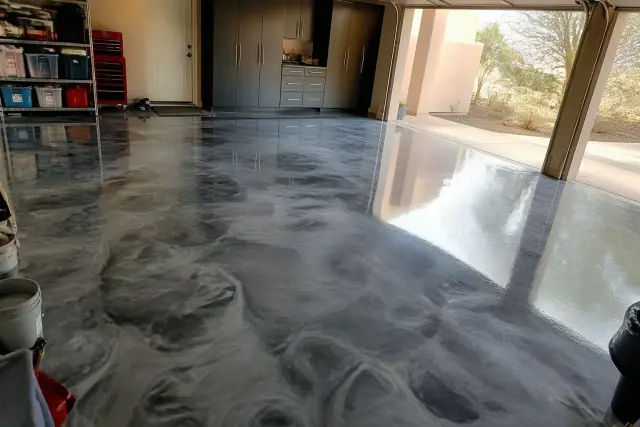
Metallic epoxy flooring with a marbled finish in a residential garage in Phoenix, AZ.

Pigmented metallic powders are shaped while the resin remains wet, creating a dimensional, marbled floor with a one-of-a-kind pattern. Metallic systems suit custom garages, auto showrooms, retail spaces, and other interiors where the floor is a design feature.

Commercial Epoxy Flooring

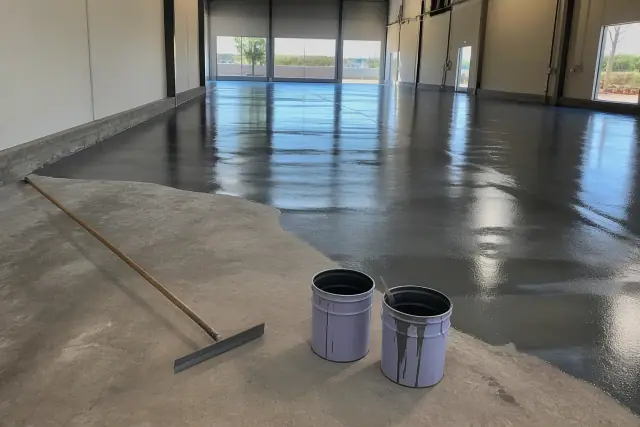
Epoxy floor coating application in a warehouse in Phoenix, AZ with concrete floors and open loading bay doors.

Commercial systems balance daily foot traffic, cleanability, and appearance for Phoenix retail, office, showroom, food-service, and clinical spaces. Available features include decorative flake or metallic finishes, slip resistance, antimicrobial surfaces, and coved bases for frequent washdowns.

Industrial Epoxy Flooring

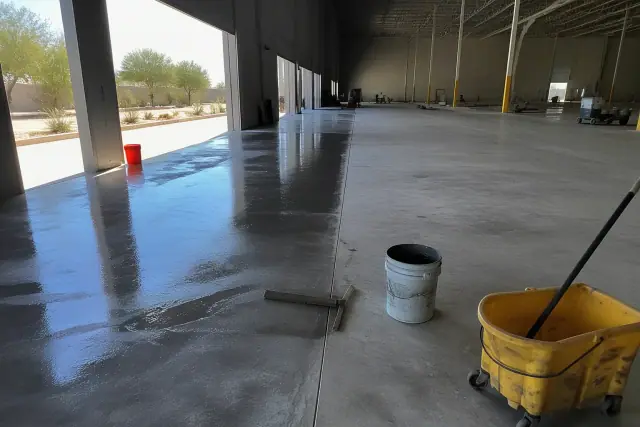
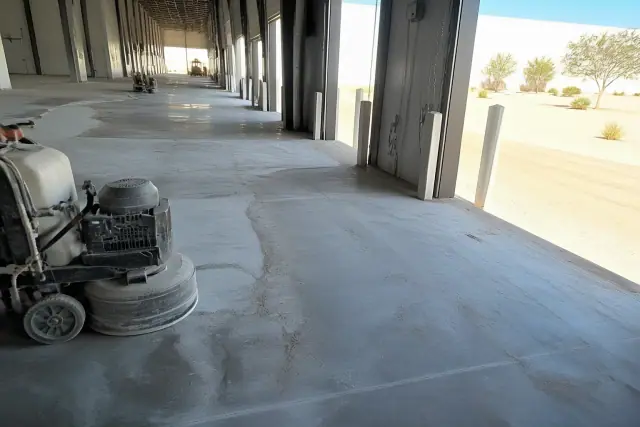
Contractor preparing unfinished concrete for industrial epoxy flooring at a logistics building in Phoenix, AZ.

High-build industrial flooring is designed for warehouse demands such as forklifts, pallet jacks, heavy point loads, and chemical spills. A polyaspartic topcoat can add abrasion resistance and support a faster return to service in active facilities.

Residential Epoxy Flooring

High-gloss flake epoxy floor installed in a residential garage in Phoenix, AZ.

Residential options cover everyday garages, below-grade storage rooms, home-based businesses, and personal auto showrooms. Moisture-barrier systems are available for slabs with elevated vapor transmission, while flake and metallic designs scale from single-car to multi-bay spaces.

Concrete Polishing

Industrial concrete polishing equipment on a warehouse floor in Phoenix, AZ.

Progressively finer diamond grits grind and densify the slab to produce a glossy or satin sheen without adding a coating layer. Polished concrete offers a durable, low-maintenance industrial-modern finish for warehouses, retail floors, and homes.

Concrete Staining & Grind and Seal

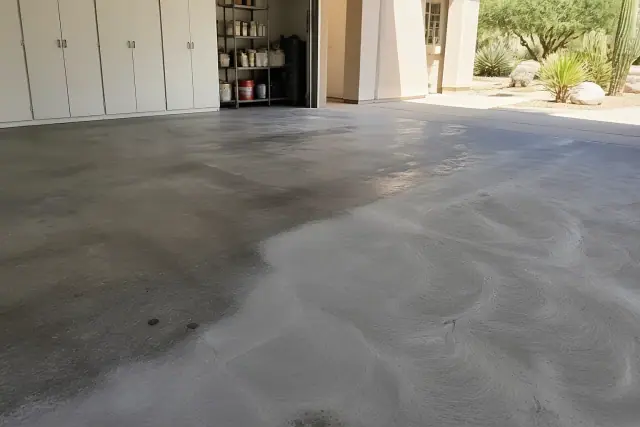
Concrete floor grinding and staining in a residential garage with desert views in Phoenix, AZ.

Acid and water-based stains penetrate concrete for variegated color that does not peel like a surface film. Grind and seal combines light mechanical grinding with a penetrating sealer, improving stain resistance and appearance at a lower cost than a full epoxy build-up.

Specialized Floor Options

Advanced Floor Finishes & Protection

Go beyond a basic solid-color coating with decorative finishes, rapid-cure topcoats, repair and moisture-control work, or performance features for demanding facilities. Each option is matched to the slab, exposure, traffic, sanitation needs, and desired appearance.

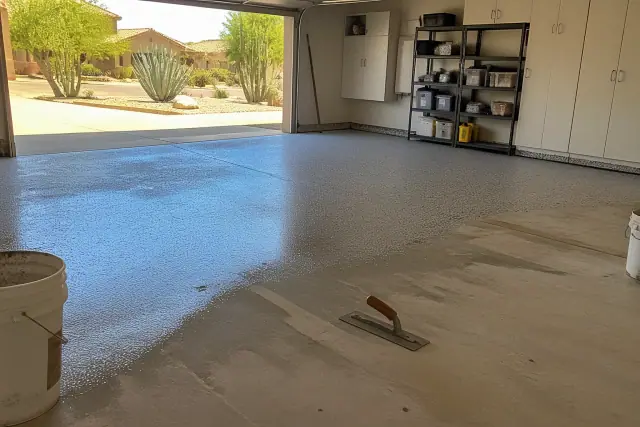
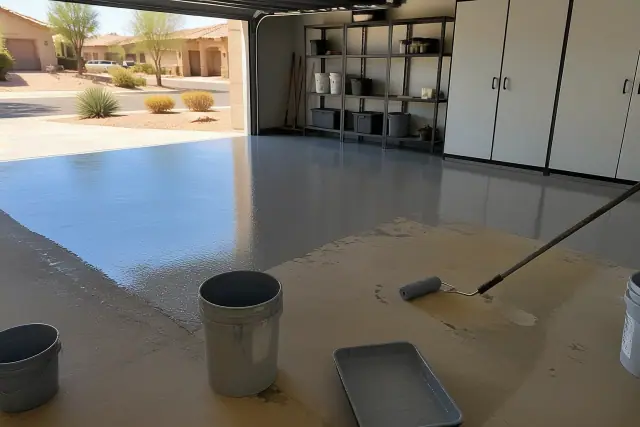
Resin application on a residential garage floor at a worksite in Phoenix, AZ, with storage cabinets and tools visible.

Decorative Finish Systems

Build the appearance around a garage, showroom, retail space, brand palette, car collection, cabinetry, or interior design. Finish samples and project photos help narrow the combination during the consultation.

  • Full-broadcast vinyl flake blends
  • Accent-broadcast flake patterns
  • Marbled metallic pigments
  • Color quartz and custom ratios
  • Glossy, satin, or matte sheen
High-sheen UV-resistant topcoat applied to a residential garage floor in Phoenix, AZ.

Fast-Cure & UV-Resistant Topcoats

Polyaspartic formulations address tight schedules and direct-sun exposure, especially at open or west-facing garage doors. They can be used as full systems or as protective topcoats over an epoxy base.

  • Recoat-ready in as little as one to four hours
  • Better UV stability than standard epoxy
  • Color retention near open garage doors
  • Abrasion-resistant protective finish
  • Wider application-temperature window
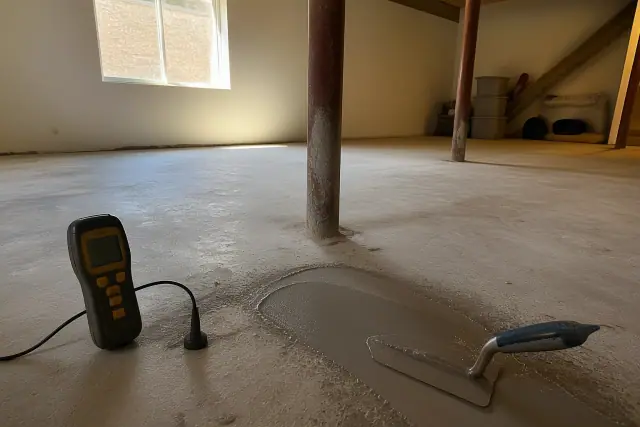
Contractor applying sealant to a foundation floor during a moisture repair project in a basement in Phoenix, AZ.

Repair, Restoration & Moisture Control

Cracked, pitted, or peeling coatings can often be mechanically removed and recoated instead of replacing the slab. Moisture testing determines whether vapor mitigation should be added before the new floor system.

  • Existing-coating removal
  • Structural crack routing and fill
  • Pitting and oil-stain preparation
  • Moisture-vapor testing
  • Moisture-barrier installation when indicated
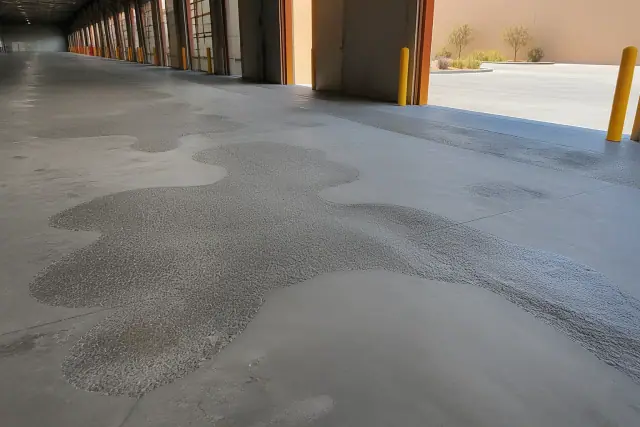
Industrial sealant and non-slip flooring installed in a Phoenix, AZ logistics warehouse.

Heavy-Traffic & Sanitation Systems

Warehouses, kitchens, clinical spaces, retail floors, and showrooms need different combinations of build thickness, traction, chemical resistance, and cleanability. The system specification follows the property's actual traffic and washdown demands.

  • High-build protection for heavy point loads
  • Forklift and pallet-jack wear resistance
  • Slip-resistant surface additives
  • Antimicrobial flooring with coved bases
  • Resistance to grease, sanitizers, and washdowns
Preparation, Standards, and Accountability

Why Phoenix Properties Choose Us

A durable floor begins with slab-specific preparation and a coating selected for the property's traffic, moisture, sunlight, and maintenance needs. Phoenix Epoxy Co. combines mechanical profiling, industry guidelines, manufacturer application specifications, insured and bonded service, and written workmanship coverage.

Mechanical Surface Preparation

We diamond-grind or shot-blast each slab to an appropriate concrete surface profile before primer is applied. Existing coatings, cracks, pitting, oil contamination, and moisture history are addressed because inadequate profile and moisture preparation are leading causes of peeling and delamination.

Standards-Led Installation

Crews follow ICRI surface preparation guidelines, ACI concrete standards, and manufacturer application specifications for epoxy and polyaspartic materials. That disciplined approach supports the correct profile, layer sequence, cure window, and performance for residential, commercial, and industrial floors.

Project Documentation & Care Guidance

Phoenix Epoxy Co. operates under Arizona Registrar of Contractors licensing requirements, carries general liability insurance, and is bonded. Manufacturer-certified materials, written project documentation, and floor-care guidance clarify the selected system and ongoing maintenance.

Start with the Slab, Not the Coating

Problems Professional Floor Prep Solves

Heat, sunlight, vapor transmission, contamination, heavy traffic, and worn concrete each call for a different preparation or coating response. An on-site assessment identifies those conditions before materials are selected, helping prevent early adhesion failure and avoidable wear.

Get a Free Estimate

Heat Cycling & UV Exposure

Phoenix slab surfaces regularly exceed 140°F and can swing more than 50 degrees between day and night. UV-resistant, fade-resistant epoxy and polyaspartic specifications help address thermal cycling and direct sun near open garage doors.

Hot-Tire Pickup & Chemical Stains

Untreated concrete and low-grade sealers can show hot-tire pickup, oil staining, brake-fluid marks, and tracked de-icing salts. A properly prepared chemical-resistant coating creates a more cleanable surface for everyday garage use.

Cracks, Pits & Peeling Coatings

Previously peeling epoxy, pitted concrete, and visible cracks often point to poor prep or slab movement. Existing material can usually be ground away, while structural cracks are routed and filled before recoating so damage is less likely to telegraph through the finish.

Moisture Vapor & Delamination

Slabs with ground-contact concerns, elevated vapor transmission, or below-grade conditions can push moisture toward the coating bond. Moisture-vapor testing determines whether a barrier or other mitigation step is needed before primer.

Heavy Traffic & Abrasion

Forklifts, pallet jacks, heavy point loads, chemical spills, and constant foot traffic wear floors differently than parked residential vehicles. High-build coatings and abrasion-resistant topcoats are specified around the facility's actual operating demands.

Dust, Grit & Monsoon Runoff

Dust storms, desert grit, and monsoon runoff accelerate wear when abrasive material is repeatedly driven across bare concrete. A sealed, coated surface is easier to sweep and mop, helping keep grit from grinding directly into the slab.

How It Works

Our Epoxy Floor Installation Process

Every project moves from slab assessment to preparation, repair, coating, and care guidance. The exact layer build and cure schedule depend on moisture, existing conditions, finish choice, sunlight, traffic, and the selected epoxy or polyaspartic materials.

01.

On-Site Slab Assessment

We walk the floor, review its use, inspect existing coatings, and discuss appearance, sun exposure, traffic, maintenance, and return-to-service needs. This visit supports a project-specific recommendation and exact estimate instead of a phone quote.

02.

Moisture Testing & Crack Mapping

Moisture testing identifies vapor conditions that may call for a barrier, especially on slabs with ground-contact history. Crack mapping records structural cracks, pitting, oil staining, and damaged areas that need correction.

03.

Mechanical Surface Preparation

Diamond grinding or shot blasting removes weak surface material and creates the concrete profile needed for adhesion. Sealed, glossy, contaminated, or previously coated slabs are not covered over without the necessary mechanical preparation.

04.

Crack Repair & Moisture Mitigation

Structural cracks are routed and filled, pitted areas are repaired, and failing coatings are ground out before the new system is built. When slab tests indicate elevated vapor transmission, the specified moisture barrier is installed.

05.

Primer, Base & Finish Application

The selected primer, color base, flake or metallic treatment, and topcoat are applied to the specified layer sequence and cure window. Epoxy bases can be paired with polyaspartic topcoats when build, UV resistance, abrasion performance, and speed all matter.

06.

Care Guidance & Project Documentation

After curing, we provide routine-care guidance for sweeping and occasional mopping with a neutral pH cleaner. Project documents outline the selected system, installation details, and recommended maintenance.

Epoxy Flooring Service Areas Around Phoenix

Phoenix Epoxy Co. serves homes, retailers, offices, showrooms, and industrial facilities across Phoenix's 517.9 square miles and the broader Salt River Valley. That coverage spans a city of over 1.6 million residents within a 5.19 million-resident metro, including the named neighborhoods, corridors, and Maricopa County areas below.

  • Phoenix
  • North Phoenix
  • South Phoenix
  • Deer Valley
  • Desert Ridge
  • Cave Creek Road Corridor
  • Loop 101 Corridor
  • Ahwatukee
  • Arcadia
  • Laveen
  • Biltmore
  • Sky Harbor Industrial Corridor
  • Downtown Phoenix
  • Salt River Valley
  • Maricopa County
  • Phoenix Metro Area
  • Phoenix Residential Properties
  • Phoenix Commercial Properties
  • Phoenix Industrial Properties
Epoxy flooring installation in progress inside a residential garage in Phoenix, AZ.

Honest Feedback from Phoenix Customers

Local Customer Experiences
★ ★ ★ ★ ★

Our garage had oil stains and a peeling sealer. The crew explained the grinding and crack repair before installing the flake floor, and the finished surface is much easier to keep clean.

AL
Amanda L.Ahwatukee Homeowner
★ ★ ★ ★ ★

The afternoon sun hits our garage through a west-facing door, so they walked us through epoxy and polyaspartic options instead of pushing one product. The new coating looks sharp and the care instructions were straightforward.

JR
Jason R.Deer Valley Homeowner
★ ★ ★ ★ ★

We wanted a metallic floor that would work under showroom lighting and hold up to daily foot traffic. They showed us finish options, explained the prep, and kept the installation plan clear from start to finish.

PS
Priya S.Phoenix Retail Owner
★ ★ ★ ★ ★

Our warehouse floor had wear from pallet jacks and a few damaged areas near the work bays. The crew mapped the repairs, recommended a high-build system, and gave us a realistic return-to-service schedule.

MT
Michael T.South Phoenix Warehouse Manager
Start with a Slab Assessment

Plan Your
Phoenix Floor
Consultation

Request a free on-site estimate for your Phoenix garage, residential, commercial, or industrial floor. We will inspect the concrete, test moisture where needed, review finish and performance options, and provide a project-specific number.

Flooring Costs, Prep, and Care

Phoenix Epoxy Flooring Questions, Answered

Compare epoxy and polyaspartic systems, understand the preparation work, and learn what affects cost, cure time, appearance, repair, and service life. For an exact recommendation, schedule an on-site slab assessment.

Call Our Epoxy Team

For a 1,000-square-foot space, expect roughly $3,000 to $10,000 depending on the system. Basic single-color epoxy is toward the lower end, while decorative or high-build floors with crack repair, moisture mitigation, or polyaspartic topcoats can move higher. Phoenix Epoxy Co. provides an exact number after inspecting the slab because condition and prep affect the price.

A 20x20 garage is 400 square feet, and most homeowners pay about $1,200 to $4,500 for a full epoxy or polyaspartic system with grinding, crack fill, base coat, and topcoat. Solid-color epoxy is usually lower, while flake or metallic finishes and slabs with cracks, pitting, or oil staining cost more. An on-site estimate confirms the actual total.

DIY resin is available through hardware retailers and specialty coating suppliers, but grades and mix ratios vary. Professional installers usually source commercial and industrial materials from dedicated suppliers that also carry primers, moisture barriers, and application equipment. Phoenix Epoxy Co. uses established Phoenix supplier channels for consistent epoxy and polyaspartic materials.

Concrete staining and grind and seal generally cost less than a full epoxy system because they do not use the same primer, base, and topcoat build-up. A basic penetrating sealer is cheaper still, but it offers less chemical and abrasion resistance. Concrete polishing can also be considered when a durable, low-maintenance finish without a coating layer fits the space.

With proper installation, routine care, and normal residential use, epoxy flooring typically lasts 10 to 20 years. Heavy industrial traffic can wear a topcoat sooner, sometimes leading to a refresh within 5 to 10 years. Sun exposure, moisture, slab preparation, and cleaning habits all affect service life.

Yes. The slab should be mechanically ground or shot-blasted to create the proper surface profile, then checked for cracks, moisture, contamination, and existing coatings before primer. Applying epoxy over sealed, glossy, or contaminated concrete without proper preparation is a common cause of peeling and delamination.

Polyaspartic offers faster curing and better UV stability, while epoxy provides strong build thickness and chemical resistance at a typically lower material cost. Many Phoenix garage systems combine an epoxy base for adhesion and build with a polyaspartic topcoat for UV and abrasion resistance. The right approach depends on sun exposure, timing, slab condition, and budget.

Standard epoxy commonly needs 24-72 hours per coat, while some polyaspartic formulations are recoat-ready in 1-4 hours. Actual cure windows depend on the selected product, slab and air conditions, and the full layer build. The installation plan should follow the manufacturer's application specifications.

Finish options include glossy, satin, and matte surfaces, solid industrial colors, blended or full-broadcast flake, metallic pigments, color quartz, and slip-resistant additives. Colors and ratios can be selected around cabinetry, trim, a brand palette, a car collection, or an interior design.

Yes, when the system is specified for the facility. High-build industrial coatings can address forklifts, pallet jacks, heavy point loads, and chemical spills, while commercial systems can prioritize daily foot traffic, appearance, sanitation, and washdowns. The required build and traction should follow the property's use.

Often, yes. A failing coating can usually be ground out, damaged areas repaired, and the slab recoated instead of replaced. Structural cracks should be routed and filled first so they are less likely to show through the new system.

Routine sweeping and occasional mopping with a neutral pH cleaner are generally sufficient for a properly cured floor. Avoid harsh cleaners that can work against the finish, and follow the care guidance provided with the installation.

A moisture barrier may be recommended when testing shows elevated vapor transmission or the slab has a history of ground-contact or below-grade moisture concerns. The decision should follow slab testing rather than assumption because moisture beneath a coating can contribute to adhesion failure.

Full-broadcast flooring distributes colored vinyl chips across the wet base coat until the surface is fully covered, adding texture, slip resistance, and visual consistency. The flake layer is then sealed beneath a clear epoxy or polyaspartic topcoat. Accent-broadcast blends use fewer chips when a lighter decorative effect is preferred.