Garage Floor Epoxy
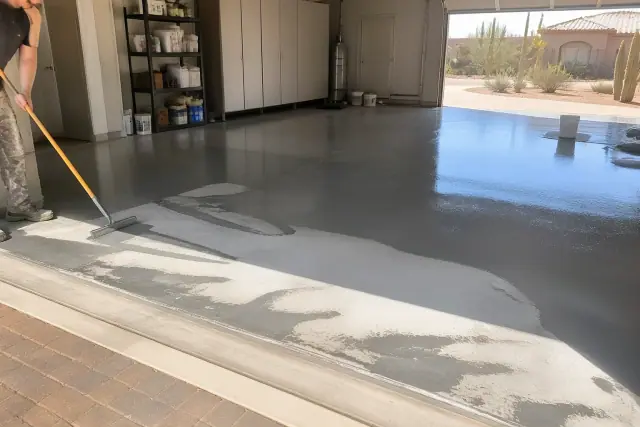
Our standard garage system bonds a two-component, 100% solids epoxy base coat to diamond-ground concrete, then adds a polyaspartic or urethane topcoat for hot-tire and chemical resistance. Explore Service
Explore Service
Phoenix Epoxy Co. installs garage floor epoxy, garage floor coatings, and polyaspartic floor coatings for Scottsdale homes and businesses. Our options also include epoxy flake and metallic finishes, residential, commercial, and industrial epoxy systems, concrete polishing, concrete staining, and grind-and-seal work. We serve properties throughout Scottsdale and the surrounding East Valley. Every recommendation begins with the slab, how the space is used, and its exposure to heat and sun.
Scottsdale slabs face 115-degree summer pavement temperatures, monsoon humidity swings, and fine, oil-absorbing Sonoran Desert dust. Caliche-heavy soil can shift and crack concrete differently from clay-based soils elsewhere in Maricopa County. We evaluate moisture, slab age, and prior coating history before recommending a system. Mechanical grinding and an ICRI-based concrete surface profile create a stronger foundation than acid etching.
We walk each garage, patio, or commercial floor on site and provide a written scope based on its preparation needs and intended finish.
From Old Town and McCormick Ranch to the Scottsdale Airpark, we match each floor system to slab condition, sun exposure, and daily use. Customers comparing another East Valley location can also review our floor-coating approach in Mesa, AZ .
Our standard garage system bonds a two-component, 100% solids epoxy base coat to diamond-ground concrete, then adds a polyaspartic or urethane topcoat for hot-tire and chemical resistance. Explore Service
Explore Service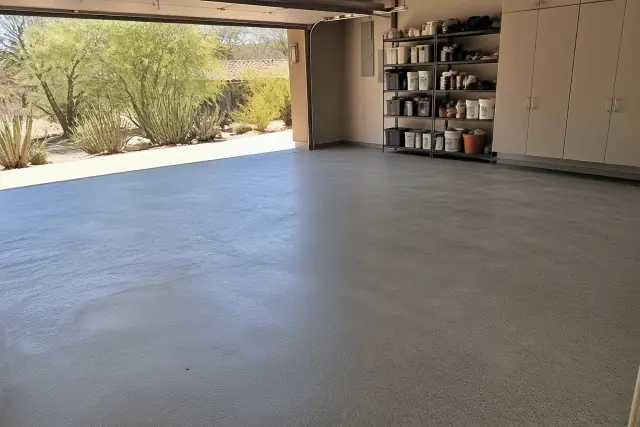
Garage floor coatings seal concrete against motor oil, sunscreen, pool chemicals, and tracked-in desert dust while creating a surface that wipes clean instead of absorbing stains. Explore Service
Explore Service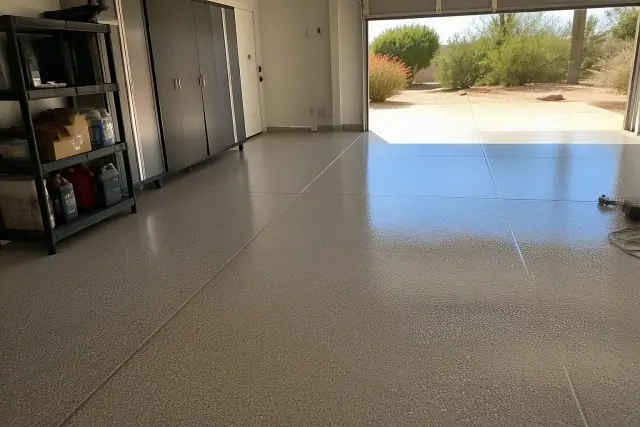
Polyaspartic coatings cure in hours rather than days and stay UV-stable through Scottsdale's roughly 300+ days of annual sunshine. Polyurea-polyaspartic hybrids cure even faster and tolerate application on 100-degree afternoons. Explore Service
Explore Service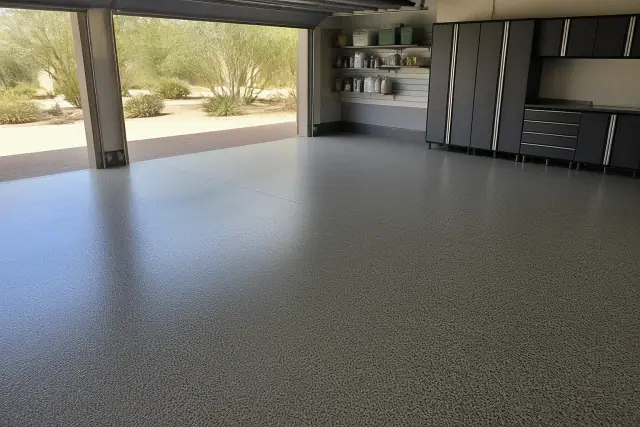
Colored vinyl chips broadcast into wet epoxy help hide minor slab imperfections, add slip resistance, and create the most requested residential garage finish we install.
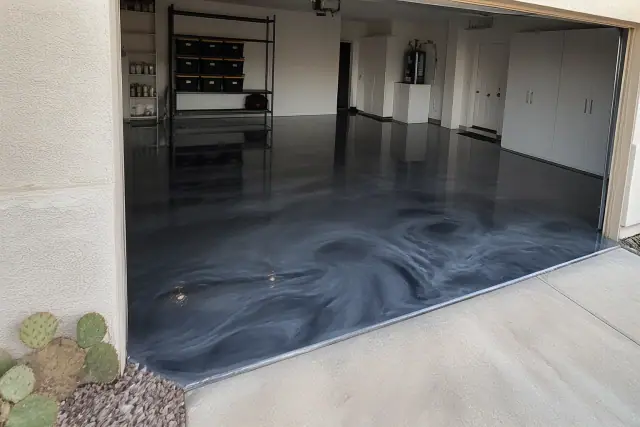
Mineral pigments manipulated in a clear epoxy base form marbled, three-dimensional patterns for showrooms, wine cellars, and high-end garages in areas such as Silverleaf and Grayhawk. No two metallic floors finish identically.
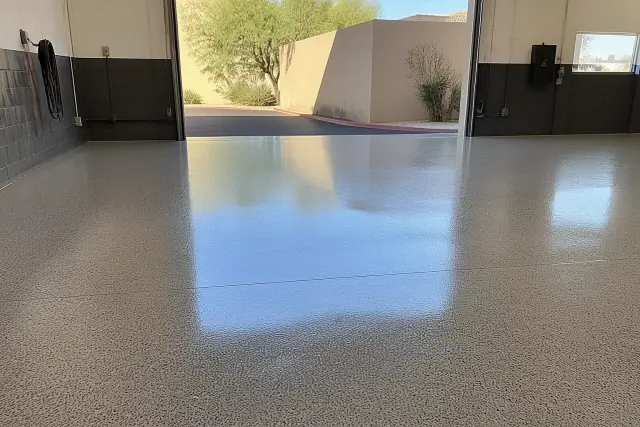
Commercial-grade epoxy and polyaspartic systems provide higher abrasion resistance for retail stores, medical offices, restaurants, and showrooms near Scottsdale Fashion Square and the Airpark. Overnight or weekend scheduling can limit operating disruptions.
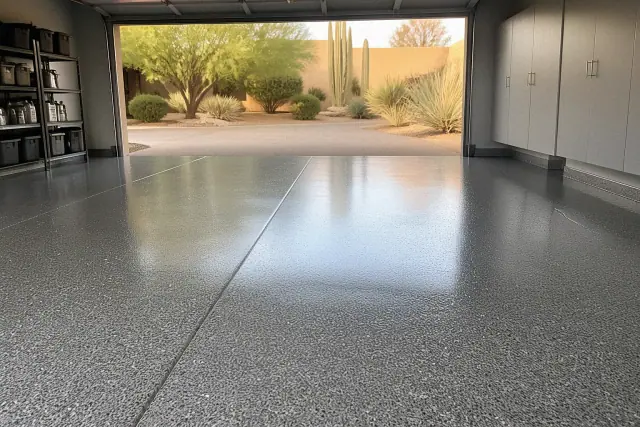
High-build, 100% solids epoxy with reinforced topcoats supports warehouses, manufacturing floors, and vehicle bays exposed to forklift traffic, chemicals, abrasion, and heavy point loads. Secondary containment coatings or urethane cement toppings can address specific industrial-fluid exposure.
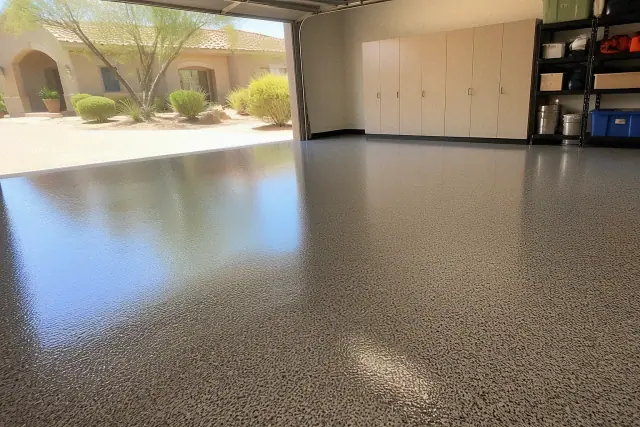
Residential epoxy brings durable, easy-clean flake, metallic, or solid-color finishes to garages, patios, laundry rooms, and basements converted to living space. UV-stable topcoats help colors hold through direct Arizona sun from open doors and windows.
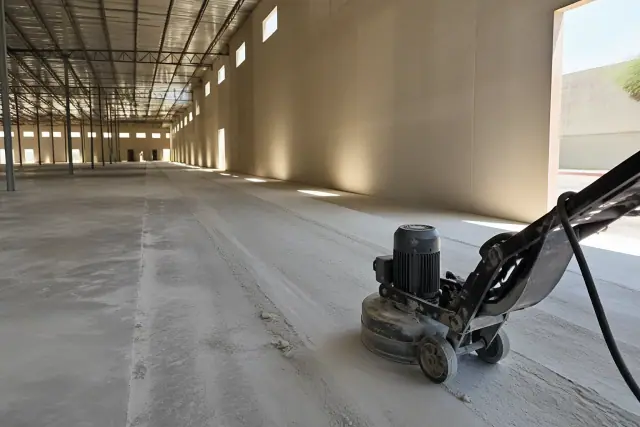
Progressively finer diamond grits produce a dense, reflective concrete surface without an added coating layer. Polishing suits commercial lobbies, retail floors, and homes that need a low-maintenance, coating-free finish.
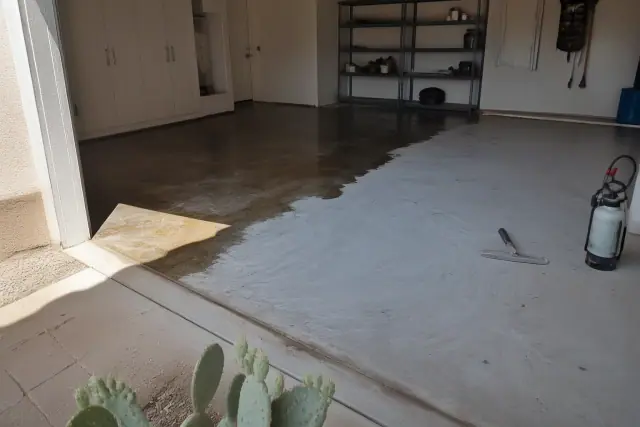
Acid or water-based stains create translucent color and pair with UV-rated sealers so the finish does not fade within a year or two. Grind and seal combines mechanical grinding with a penetrating or film-forming sealer for a lower-cost option on patios, storage areas, and budget-conscious garages.
The right floor depends on concrete condition, moisture, sun exposure, traffic, desired appearance, cure time, and budget. We compare those factors during the on-site evaluation instead of recommending the same coating for every property.
Slab age, moisture vapor emission, cracks, pitting, oil contamination, and failed coatings determine how much repair and preparation must happen before coating.
South- and west-facing garage doors expose floors to intense afternoon sun, making a UV-stable polyaspartic or aliphatic urethane topcoat essential. The right topcoat can still look true after five years instead of discoloring within one Scottsdale summer.
A home gym, golf-cart garage, retail lobby, forklift aisle, and vehicle bay place different abrasion, impact, point-load, and chemical demands on a coating. The formulation should match the floor's actual use.
Flake hides minor imperfections, metallic pigment creates a unique marbled appearance, and solid colors provide a cleaner uniform look. A non-slip additive in the topcoat adds traction where car washing or monsoon runoff leaves the floor wet.
Polyaspartic chemistry can shorten cure time, while epoxy provides thicker film build and needs longer between coats. The selected system should account for how quickly the garage or business must return to use.
Correct mechanical preparation and a high-grade topcoat cost more initially but reduce the cycle of replacing thin, failed coatings. Industry data cited for residential epoxy garage floors places potential resale return as high as 500 to 1,100 percent relative to installation cost.
Heat, UV, moisture, slab movement, contaminants, and poor preparation all show up as different flooring failures. Identifying the cause before coating helps prevent the same problem from returning beneath a new surface.
Request Floor EvaluationSummer asphalt heat transfers into parked tires and can soften lower-grade coatings, causing the finish to lift where the tires rest. A compatible high-solids base and resistant topcoat address this Scottsdale failure point.
Standard epoxy exposed as the final layer can amber or chalk under sustained Arizona sun. A UV-stable polyaspartic or aliphatic urethane topcoat protects color on garages, patios, and pool-adjacent floors.
Moisture vapor trapped beneath a slab can break the coating bond and create bubbles or peeling. Testing before installation guides the coating choice and any needed moisture mitigation.
Caliche-related slab movement, abrasion, and exposed concrete can produce cracks, pits, and ongoing mineral dust within a few years. Repairing defects and opening the pore structure gives the new system a sounder bond.
Bare concrete absorbs motor oil, sunscreen, pool supplies, and other automotive fluids, making stains difficult to remove. Surface diagnostics and preparation address contaminated areas before the new coating is applied.
Smooth coatings can become slippery during car washing or when monsoon runoff enters the garage. Broadcasting a non-slip additive into the topcoat improves wet traction.
Phoenix Epoxy Co. works with Scottsdale's heat, sun, caliche soil, and varied construction eras every week. Our recommendations combine local slab knowledge, mechanical preparation, and Arizona contractor licensing with an on-site walkthrough before every quote.
Local experience informs how we approach caliche-driven cracks and choose topcoats that can hold through a full Scottsdale summer instead of failing in year two.
Diamond grinding opens the concrete pore structure to an ICRI-based surface profile. This produces a stronger coating bond than acid etching, which can leave a weaker surface behind.
We carry Arizona contractor licensing and handle grinding waste and coating materials in line with Maricopa County Air Quality Department and Arizona Department of Environmental Quality requirements. Our crew also walks the completed floor with you before closing the job.
Every project follows a consistent sequence from slab evaluation through the final walkthrough. The details of repair, coating, finish, and cure time adjust to the floor's condition and use.
We inspect the slab's age, intended use, sun exposure, existing finish, cracks, pitting, and contamination before recommending a floor system.
Moisture vapor emission and prior coating failures are checked because trapped moisture is a leading cause of delamination in Arizona installations.
Mechanical grinding with diamond tooling opens the surface to the correct concrete profile, and industrial vacuuming removes the resulting dust before coating.
We repair cracks and control joints, patch pitted areas, and prepare contaminated spots so defects do not simply telegraph through the new finish.
The epoxy base coat is applied to the prepared slab, followed by decorative flake or metallic pigment when specified and allowed to reach the correct hardness.
We finish with a polyaspartic or urethane topcoat, keep the floor clear of foot traffic for 24 hours and vehicles for several days, then review the finished surface with you.
Case Study 1: Residential Garage: A sealed flake, metallic, or solid-color floor resists hot-tire pickup, tracked dust, and common garage contaminants while making cleanup easier.
Case Study 2: Commercial Floor: Higher-abrasion formulations and slip-resistant additives support public-facing retail, restaurant, medical, lobby, and showroom traffic.
Case Study 3: Industrial Floor: High-build systems with reinforced or chemical-resistant topcoats address forklift movement, impacts, spills, and heavy point loads.
Tell us how you use the space and what finish you have in mind. We will walk the slab, identify preparation needs, compare suitable systems, and provide a written quote before you commit.
These answers cover pricing, system selection, preparation, timing, maintenance, and coverage for Scottsdale epoxy flooring projects. A site visit is still the best way to evaluate a specific slab.
Call Our Epoxy TeamNational data places professional installation between $2 and $12 per square foot, with many basic systems between $7.78 and $12.71 per square foot. The national average is around $2,370, and most projects fall between $1,703 and $3,280. Scottsdale pricing still depends on slab condition, moisture mitigation, crack repair, system, and finish, so we quote after walking the space.
A standard 2-car garage system in the Phoenix metro, including Scottsdale, generally runs from $2,000 to $4,500. Premium systems with a polyaspartic topcoat, decorative flake, or metallic finish often range from $4,500 to $7,000, depending on size and preparation needs.
Performance depends heavily on preparation and system design. Skipping mechanical grinding or moisture testing can lead to peeling, bubbles, or delamination, while unprotected epoxy can yellow under Arizona sun. Smooth finishes may also be slippery when wet unless a traction additive is included.
Polyaspartic coatings cure in hours and resist UV yellowing, while epoxy usually needs one to three days and provides thicker film build at the base. In Scottsdale garages, we often combine an epoxy base for build and adhesion with a polyaspartic topcoat for UV and abrasion resistance.
A properly installed two-component epoxy system with a polyaspartic topcoat typically lasts 10 to 20 years, and some well-maintained systems run 15 to 30 years before recoating. Thin, lower-grade coatings may need replacement within 3 to 5 years, while well-prepared high-solids systems commonly reach 15 to 20 years or longer.
Most residential garage work runs one to three days. A single-car garage often takes one to two days, while two- and three-car garages commonly take two to three days depending on repairs and cure time between coats.
We keep the garage clear of foot traffic for 24 hours and vehicle traffic for several days after completion. Exact return-to-use guidance depends on the coating chemistry and site conditions, and we review it during the final walkthrough.
Diamond grinding opens the concrete pore structure to the required ICRI-based surface profile and removes weak surface material. Acid etching does not create the same consistent mechanical profile, which can leave the coating with a weaker bond.
Standard epoxy can yellow or chalk under sustained UV exposure, especially at open south- or west-facing garage doors. We use a UV-stable polyaspartic or aliphatic urethane topcoat to protect color and resist the heat transferred from tires.
Flake systems hide minor imperfections and add texture, metallic systems create distinctive marbled patterns, and solid colors provide a more uniform finish. The best fit depends on the room, desired appearance, traction needs, and sun exposure.
Polishing uses progressively finer diamond grits to produce a dense reflective surface without a coating. Staining adds translucent color before sealing, while grind and seal pairs mechanical grinding with a penetrating or film-forming sealer as a lower-cost finish.
We install residential epoxy in garages, patios, laundry rooms, and basements converted to living space. System selection changes with moisture, direct sun, traffic, and the finish level expected for the room.
Commercial floors use higher-abrasion formulations and often add slip resistance for public-facing traffic. Industrial systems can use high-build 100% solids epoxy, reinforced topcoats, secondary containment coatings, or chemical-resistant urethane cement for forklifts, fluids, impacts, and heavy point loads.
Yes. A non-slip additive can be broadcast into the topcoat to improve traction when the floor is wet from washing vehicles or monsoon runoff. The appropriate texture depends on the space and how it is used.
We work across Old Town Scottsdale, Arcadia, McCormick Ranch, Gainey Ranch, DC Ranch, Grayhawk, Troon North, Silverleaf, Kierland, and areas near the McDowell Sonoran Preserve. Coverage also includes Paradise Valley, Fountain Hills, Tempe, Cave Creek, Carefree, Phoenix, broader Maricopa County, and the greater Phoenix metro; contact us to confirm a specific address.