Proudly serving Phoenix, Scottsdale, Mesa, Chandler, Gilbert, Tempe & surrounding areasCall or Text 24/7: 480-264-9663
Aerial view of a residential neighborhood with saguaros and desert foothills in Phoenix, AZ.

Garage Floor Epoxy and Industrial Concrete Coating Systems in Peoria, AZ

Phoenix Epoxy Co. installs garage floor epoxy, garage floor coatings, and polyaspartic floor coatings for homeowners and businesses throughout Peoria, Arizona. Our team also installs epoxy flake and metallic finishes, commercial and industrial flooring, residential epoxy, polished concrete, stained concrete, and grind-and-seal floors. Every project starts with an on-site evaluation of the slab, the space, and the wear it must handle. We are a licensed epoxy flooring contractor that is bonded and insured.

Peoria concrete faces triple-digit summer heat, hot-tire stress, monsoon humidity, and shifting caliche-heavy soil. Those conditions can expose weak preparation through bubbles, peeling, or delamination. We test for moisture vapor, mechanically prepare the concrete, and match film thickness, texture, and topcoat chemistry to the floor's use. That slab-first process gives customers a clearer system recommendation before work begins.

We serve both the Maricopa County and Yavapai County portions of Peoria, from Arrowhead Ranch, Westwing, Old Town Peoria, and P83 to Vistancia, Trilogy, and the Lake Pleasant area. Peoria grew from 154,065 residents in 2010 to 190,985 in the 2020 census, bringing more new-build garages, resale inspections, and rapidly poured slabs into the local market. Call Phoenix Epoxy Co. for a free on-site estimate based on the condition of your concrete.

★ ★ ★ ★ ★4.9/5 Average Rating - 20+ Years of Experience - Peoria Epoxy Flooring Contractor Specialists - Residential & Commercial
Peoria Flooring Services

Epoxy Flooring Services in Peoria, AZ

Phoenix Epoxy Co. installs these systems across Peoria, including Vistancia, Trilogy at Vistancia, Westwing Mountain, Arrowhead Ranch, Fletcher Heights, Pleasant Valley, Old Town Peoria, P83, and the Lake Pleasant area. The same slab-first evaluation shapes our work in other Arizona service areas, including Queen Creek, AZ , because coating selection should follow site conditions rather than a one-size-fits-all package.

Garage Floor Epoxy

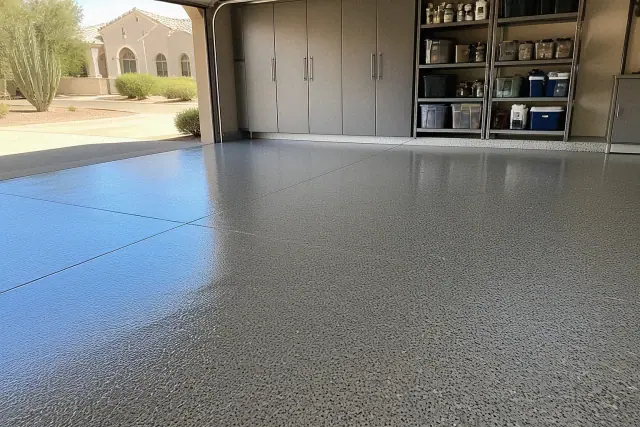
Completed epoxy garage floor with a high-gloss speckled finish in a residential garage in Peoria, AZ.

We install epoxy in layered courses rather than a single rolled-on coat. Proper grinding, primer, base coat, and protective topcoat create a garage surface that resists hot-tire pickup, road salt, and automotive fluids.

Explore Service

Garage Floor Coatings

Epoxy floor coating being applied to a residential garage floor in Peoria, AZ.

Garage floor coatings are specified around slab condition, traffic, appearance, and exposure. Options range from solid-color epoxy to decorative broadcast systems and UV-stable topcoats, with crack repair and moisture findings addressed before coating.

Explore Service

Polyaspartic Floor Coatings

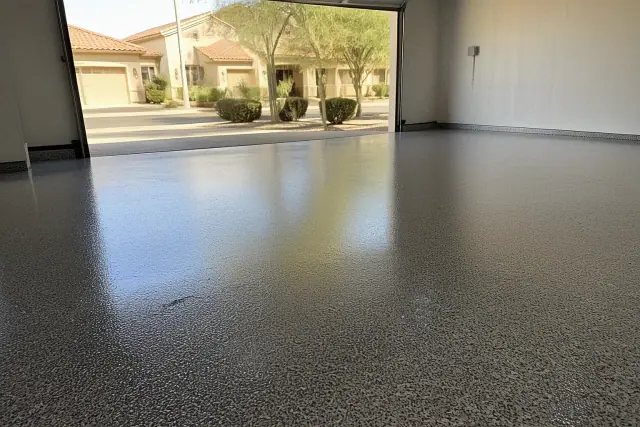
High-gloss, flake-textured polyaspartic floor coating in a residential garage in Peoria, AZ.

Polyaspartic coatings cure much faster than standard epoxy, often allowing foot traffic within hours instead of days. Their stronger UV stability also helps resist amber yellowing, so we often use polyaspartic over an epoxy base coat.

Explore Service

Epoxy Flake Flooring

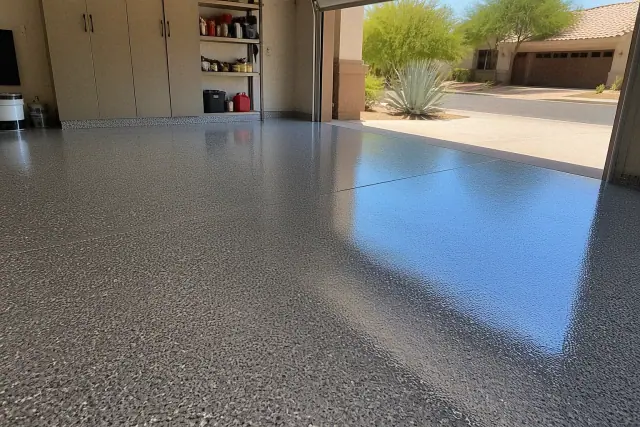
Epoxy flake flooring with a wet-look sheen in a residential garage in Peoria, AZ.

Colored vinyl flakes are broadcast into wet epoxy and sealed under a clear topcoat. Full- or partial-broadcast blends can hide minor slab imperfections, add texture and slip resistance, and soften the look of daily wear.

Metallic Epoxy Flooring

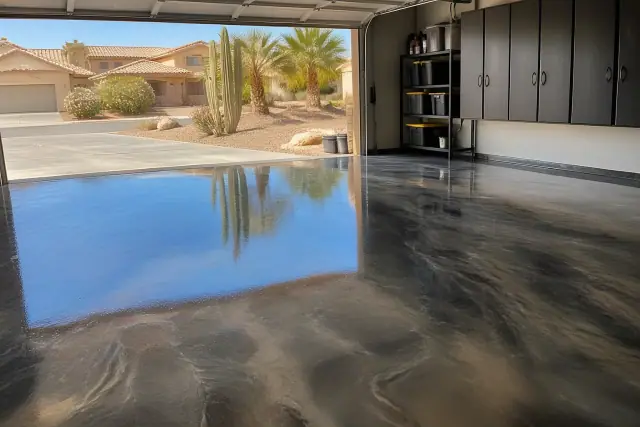
Metallic epoxy garage floor with a high-gloss swirling finish in a Peoria, AZ residential home.

Mica-based pigments are manipulated while the resin is wet to create marbled, three-dimensional movement. Metallic epoxy suits showroom garages, custom homes, and entryways where a one-of-a-kind decorative floor is the goal.

Commercial Epoxy Flooring

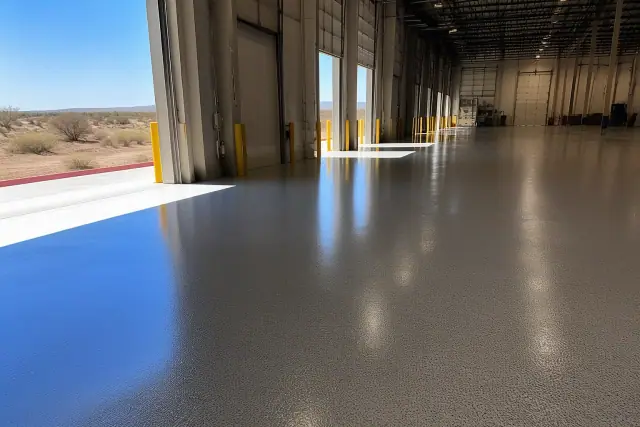
Finished commercial epoxy flooring in an industrial warehouse in Peoria, AZ.

Commercial systems are built for continuous foot traffic, rolling carts, and forklift wheels. We adjust film thickness and aggregate broadcast for retail spaces, offices, and warehouses instead of applying a residential specification to heavier loads.

Industrial Epoxy Flooring

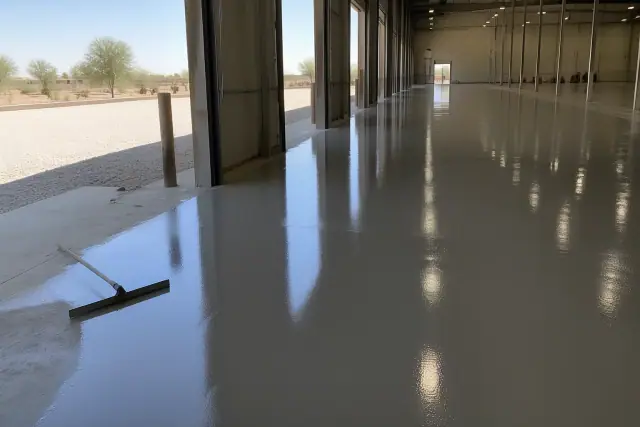
Wet industrial epoxy flooring in a warehouse with a squeegee in Peoria, AZ.

Industrial floors may require higher-build epoxy or polyurethane topcoats selected for documented abrasion and chemical exposure. These systems are intended for oils, solvents, heavy equipment, and demanding facility traffic.

Residential Epoxy Flooring

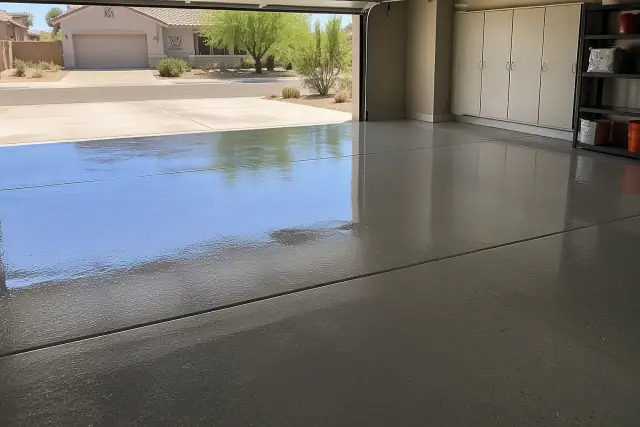
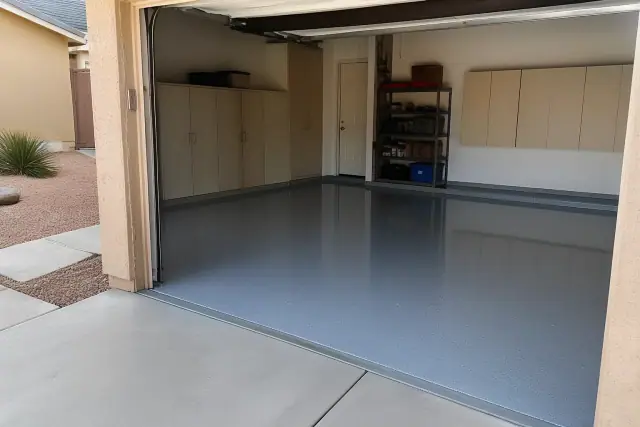
Completed residential epoxy garage floor with a high-gloss finish in a home in Peoria, AZ.

Residential epoxy extends beyond garages to laundry rooms, workshops, converted basements, and interior living areas. Each room receives the same surface-preparation standard, even when the floor area is smaller.

Concrete Polishing

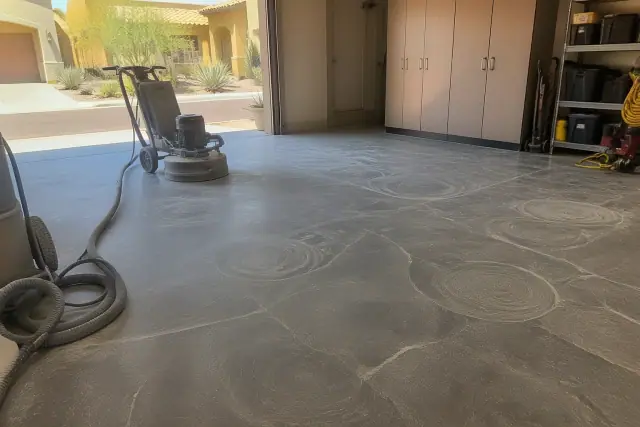
Polished concrete floor with grinding patterns and equipment in a residential garage in Peoria, AZ.

Progressively finer diamond grits grind and densify the concrete surface to create a durable, low-maintenance finish without a coating layer. Polished concrete works well in retail spaces, commercial garages, and homes that need a modern floor that does not trap dust in a textured surface.

Concrete Staining & Grind and Seal

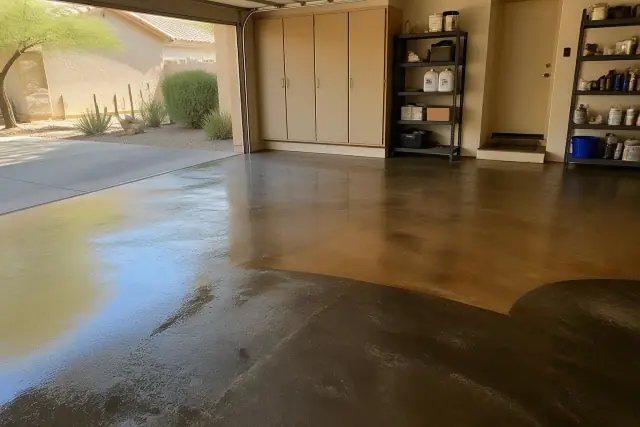
Concrete floor with staining and grind and seal finish in a residential garage in Peoria, AZ.

Concrete staining uses acid- or water-based color that penetrates the slab before sealing, making it suitable for patios, pool decks, and interiors. Grind-and-seal mechanically refines the surface and adds a matched penetrating or film-forming sealer for garages, workshops, and storage areas.

System Selection

How to Choose the Right Floor Coating in Peoria

System selection starts with how the floor will be used, what the slab needs, and which finish fits the space. We compare traffic, moisture, UV exposure, cure time, texture, repair scope, installed cost, and expected service life before recommending a build.

Intended Use and Traffic

Light-use garages, retail floors, and warehouses place different loads on a coating. Thin residential-grade finishes can wear through within a year or two under continuous rolling loads, so commercial and industrial floors need film thickness and aggregate sized to traffic.

Surface Preparation Needs

Existing paint, sealer, contamination, cracks, spalling, and control joints all change the prep scope. Diamond grinding opens the concrete pores, and compatible epoxy or polyurethane fillers keep old damage from telegraphing through the finish.

Moisture Vapor Conditions

Moisture testing is essential on older Peoria slabs, particularly where vapor-barrier detailing may predate tighter requirements. Elevated readings call for a moisture-tolerant primer and may change which coating system is appropriate.

Finish and Texture

Solid color offers a clean uniform look, flake adds texture and visual forgiveness, metallic pigments create marbled movement, and staining develops variegated color in the slab. The right choice depends on appearance, slip resistance, and maintenance priorities.

Cure Time and Sun Exposure

Cure windows and Arizona sun exposure can drive topcoat selection. Polyaspartic offers faster return-to-use and stronger UV stability than standard epoxy, especially at sunlit garage entries.

Installed Cost and Service Life

National material-and-labor pricing for epoxy garage floors typically runs $7.78 to $12.71 per square foot. Material commonly accounts for $2 to $6 per square foot and labor $4 to $9 per square foot, with grinding, repairs, decorative choices, and topcoat chemistry shaping the final estimate.

Peoria Floor Issues

Common Concrete Floor Problems on Peoria Properties

Heat, vapor, soil movement, vehicle fluids, and abrasive dust all leave recognizable signs on Peoria concrete. A floor evaluation separates cosmetic wear from conditions that must be repaired or mitigated before coating.

Request Floor Evaluation

Hot-Tire Pickup

Garage slabs can climb past 140 degrees in summer, and heat-loaded tires can pull at coatings that lack proper bond strength. Mechanical prep and a system matched to garage use help reduce lifting and blistering.

Moisture Vapor and Bubbling

Monsoon humidity can drive vapor through slabs that were never sealed or detailed correctly. Coating over elevated moisture readings can trap that vapor, creating bubbles and early bond failure.

Peeling and Delamination

Floors installed without moisture testing and mechanical preparation may peel, bubble, or delaminate within 3 to 5 years. A correctly prepared epoxy or polyaspartic system commonly lasts 15 to 30 years, which makes prep the decisive difference.

Cracks and Spalling

Caliche-heavy soil and repeated expansion and contraction can leave cracks, pitting, spalling, and movement at control joints. These defects need compatible repair materials before primer and base coat.

Oil and Chemical Stains

Bare concrete absorbs motor oil, transmission fluid, pool chemicals, and industrial solvents. Cleaning and grinding must remove or isolate contamination so it does not interfere with adhesion.

Dust and Abrasive Grit

Fine desert dust and caliche grit scratch and wear porous, unsealed concrete over time. Polishing, sealing, or coating creates a surface that is easier to clean and better suited to daily use.

Why Choose Us

Why Choose Phoenix Epoxy Co. in Peoria?

Phoenix Epoxy Co. combines local slab evaluation with documented preparation and system selection. The goal is to recommend a floor around actual moisture, traffic, chemical, UV, and appearance requirements-not a generic coating package.

Licensed, Bonded and Insured

Phoenix Epoxy Co. operates as a licensed Arizona epoxy flooring contractor and carries bonding and insurance coverage for its work. When a project scope requires a permit, we coordinate through the City of Peoria Development Services Department.

Peoria Climate and Slab Knowledge

We account for summer heat, monsoon-season humidity, and caliche-heavy soil on every Peoria evaluation. Developments built during the 2000s expansion can present inconsistent vapor-barrier detailing, so we test the slab before opening a coating bucket.

Standards-Based Installation

Our mechanical profiling follows guidance consistent with International Concrete Repair Institute practices, and questionable slabs are evaluated with ASTM F710 moisture-testing protocols. Commercial substrate preparation also draws on SSPC guidance when traffic and exposure demand a higher-build system.

Six-Step Process

Our Epoxy Flooring Installation Process in Peoria

Our six-step sequence is used for two-car residential garages and commercial floors spanning thousands of square feet. Each stage addresses a specific bond, appearance, or durability requirement before the next layer is applied.

01.

Surface Grinding and Preparation

Diamond grinding opens the concrete pore structure and removes existing sealer, paint, and contamination. This mechanical profile gives the coating a clean surface to bond to.

02.

Concrete Repair and Filling

Cracks, spalling, and control joints are filled with a compatible epoxy or polyurethane material. Repairing them before coating limits old damage from showing through the finished floor.

03.

Moisture-Tolerant Primer

Primer is rolled into the prepared concrete to promote adhesion. Where moisture readings run high, a moisture-tolerant primer helps reduce vapor transmission into the layers above.

04.

Base Coat and Decorative Broadcast

Epoxy base coat is placed at a controlled mil thickness. Vinyl flake or metallic pigment is added while the resin is wet when the selected design calls for it.

05.

Scraping and Cleanup

Excess flake is scraped and vacuumed after the broadcast cures. This creates a flatter, more walkable texture before the protective topcoat is applied.

06.

Protective Topcoat

A polyaspartic or polyurethane topcoat seals the system. Topcoat chemistry and aggregate are selected for UV stability, slip resistance, abrasion, and the chemicals the floor is expected to encounter.

Service-Life Comparison

Expected Service Life by Flooring System

Case Study 1: Standard epoxy and grind-and-seal: Standard epoxy typically serves 10 to 15 years in budget-conscious, light-use garages, while grind-and-seal commonly serves 5 to 10 years in workshops and storage areas.

Case Study 2: Decorative epoxy: Epoxy flake and metallic epoxy systems each typically serve 15 to 20 years. Flake favors texture and visual forgiveness; metallic favors a custom marbled finish.

Case Study 3: Polyaspartic topcoat systems: These systems typically serve 15 to 30 years and suit high-traffic garages or projects where faster turnaround matters. Actual system choice still depends on slab condition and use.

Plan Your Floor

Schedule a Free
On-Site
Estimate

A site visit lets us measure the floor, inspect cracks and control joints, test for moisture, and discuss solid-color, flake, metallic, polishing, staining, or grind-and-seal options. Phoenix Epoxy Co. then builds the estimate around preparation, system thickness, finish, and expected traffic rather than quoting the slab sight unseen.

Local Flooring Help

FAQs About Epoxy Flooring in Peoria, AZ

These answers cover the questions Peoria homeowners and business owners ask most often about concrete coating selection, preparation, cost, cure time, and maintenance. Call if you need a recommendation based on your slab.

Call Our Flooring Team

A standard two-car garage of roughly 400 to 600 square feet generally falls between $1,870 and $2,700 for a full epoxy system. Price changes with grinding, crack and control-joint repair, system thickness, decorative finish, and the choice of topcoat. We provide the final quote after an on-site slab evaluation.

A properly prepared epoxy or polyaspartic system generally lasts 15 to 30 years. Floors installed without moisture testing and mechanical preparation may show peeling, bubbling, or delamination within 3 to 5 years, so preparation matters as much as the coating.

Epoxy installation requires accurate grinding, moisture testing, mixing, application timing, and control of cure conditions. DIY applications often peel, bubble, or develop uneven texture within months when those steps are missed. A licensed contractor can evaluate the slab and specify the system around local conditions.

Polyaspartic cures much faster than standard epoxy, often allowing foot traffic within hours instead of days. It also resists UV yellowing better in Arizona sun, while standard epoxy provides a versatile base layer. Polyaspartic generally costs more upfront.

Yes. We seal every polished concrete floor we finish to protect its appearance, reduce moisture intrusion, and keep spills from soaking into the surface. An unsealed floor can dust and absorb staining liquids over time.

We diamond-grind the slab to remove sealer, paint, and contamination while opening the concrete pores. Cracks, spalling, and control joints are repaired with compatible filler, then primer is applied before the base coat. Moisture findings determine whether a moisture-tolerant primer is needed.

Cracked or spalled concrete can often be coated after the damage is evaluated and repaired. We fill cracks, spalling, and control joints with a compatible epoxy or polyurethane material before primer so old defects do not immediately telegraph through the finish.

Solid-color epoxy creates a uniform floor, vinyl flake adds texture and helps hide minor imperfections, and metallic epoxy uses mica-based pigments for marbled movement. Flake can be installed as a full or partial broadcast depending on the look and texture desired.

A properly selected and installed garage system is designed to resist hot-tire pickup and common automotive fluids. Industrial and specialty floors may need higher-build epoxy or polyurethane topcoats matched to oils, solvents, pool chemicals, abrasion, and expected traffic.

Commercial spaces may use slip-resistant epoxy sized for foot traffic, carts, and forklift wheels. Industrial floors often need higher-build epoxy or polyurethane topcoats matched to chemical exposure and abrasion. We set film thickness and aggregate broadcast around the documented use of the facility.

Polyaspartic coatings often allow foot traffic within hours, while standard epoxy may require days. Actual return-to-use depends on the selected system and cure conditions, so we provide the applicable timing for the project.

We work throughout Peoria, including Vistancia, Trilogy at Vistancia, Westwing Mountain, Arrowhead Ranch, Fletcher Heights, Pleasant Valley, Old Town Peoria, P83, and the Lake Pleasant area. Our crews also serve Glendale, Surprise, Sun City, Sun City West, El Mirage, Youngtown, and parts of northwest Phoenix.

Moisture vapor beneath a coating is a leading cause of bubbling and early bond failure. Testing is especially important for older Peoria slabs where vapor-barrier detailing may not match current requirements. The reading helps determine whether a moisture-tolerant primer or a different system is appropriate.

Grind-and-seal mechanically refines the concrete and protects it with a penetrating or film-forming sealer. Epoxy builds a layered coating system that can include solid color, decorative flake, metallic pigment, and a protective topcoat. The right option depends on budget, appearance, traffic, and exposure.

Concrete staining is a common choice for patios, pool decks, and interior floors where variegated color is preferred over a glossy epoxy look. Acid- or water-based stain penetrates the slab, and we seal the surface afterward to lock in color and reduce moisture intrusion.