Proudly serving Phoenix, Scottsdale, Mesa, Chandler, Gilbert, Tempe & surrounding areasCall or Text 24/7: 480-264-9663
Aerial view of a residential neighborhood with saguaros and desert foothills in Phoenix, AZ.

Concrete Staining and Grind-and-Seal Contractors in Phoenix, AZ

Phoenix Epoxy Co. serves Phoenix with concrete staining, grind and seal finishing, polished concrete, and full epoxy and polyaspartic coating systems. We finish existing slabs in garages, patios, showrooms, warehouses, commercial kitchens, and modern interiors. Each approach is matched to the slab, the desired appearance, and the traffic or chemical exposure the floor will face. Our service area extends across the Phoenix metro.

Phoenix slabs contend with caliche, expansive clay, August monsoon downpours, and July slab temperatures that can reach 115 degrees. Those conditions can contribute to cracks, pitting, discoloration, efflorescence, and surface spalling. We begin with moisture testing and prepare concrete to ICRI CSP standards using diamond grinding equipment or shot-blast systems. That preparation creates the profile needed for a stain, sealer, or resin system to bond correctly.

Projects are licensed under the Arizona Registrar of Contractors, and sealer selection stays within Maricopa County Air Quality Department VOC limits. Before installation, we explain surface preparation, color or finish choices, system thickness, and the applicable cure schedule.

Phoenix Epoxy Co. provides concrete staining and grind and seal services in Phoenix, Scottsdale, Tempe, Mesa, Chandler, and Glendale.

★ ★ ★ ★ ★4.9/5 Average Rating · 20+ Years of Experience · Thousands of Customers Helped · Licensed & Insured · Residential & Commercial

Concrete Staining & Grind and Seal Benefits

What Are Concrete Staining and Grind and Seal?

Concrete staining and grind and seal both turn an existing, aging slab into a finished floor without demolishing it or covering it with tile or wood. Staining adds color to the concrete, while grind and seal exposes a clean, sound surface and protects it with a penetrating or film-forming sealer.

A grind and seal floor starts with a multi-pass diamond sequence, typically beginning with 30-grit metal-bond tooling before moving through resin bonds. Grinding opens the pore structure, removes surface contamination, and reveals aggregate before the selected sealer locks in the finish.

Concrete staining can use acid-based chemistry that reacts with lime in cured concrete or water-based penetrating color for a broader, more consistent palette. Because slab age, porosity, and lighting influence the result, the stain and topcoat must be selected together.

Benefits of Finishing Existing Concrete

The right finish makes an existing slab easier to maintain, more visually intentional, and better protected for its actual environment. The best method depends on whether the priority is color, exposed aggregate, UV stability, abrasion resistance, chemical resistance, or a combination of those needs.

  • Uses the existing concrete slab without demolition
  • Removes degraded paste and embedded surface contamination
  • Adds mottled, consistent, or exposed-aggregate visual character
  • Helps block oil, monsoon moisture, and irrigation runoff
  • Offers UV-resistant finish options for exterior surfaces
  • Supports added texture where slip resistance matters
  • Fits residential, retail, warehouse, and kitchen use
  • Provides lower-build and heavy-duty alternatives
Concrete Floor Finishing Services

Concrete Floor Finishing Services

Phoenix Epoxy Co. offers finish systems for decorative residential slabs and demanding commercial floors. We select the preparation method, color treatment, coating build, texture, and topcoat around how the space will be used.

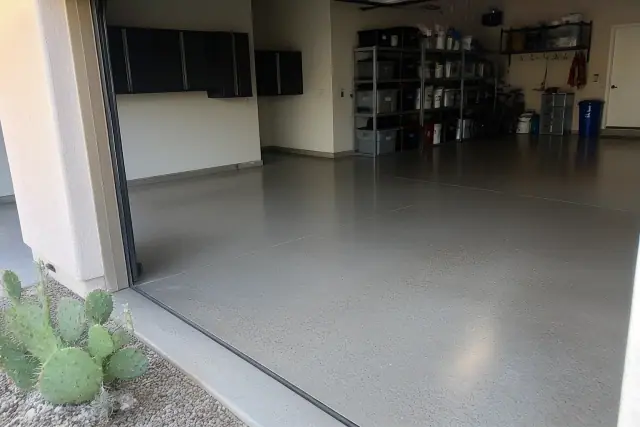
Grind and Seal Concrete

Polished grind and seal concrete floor in a residential garage with utility shelving in Phoenix, AZ.

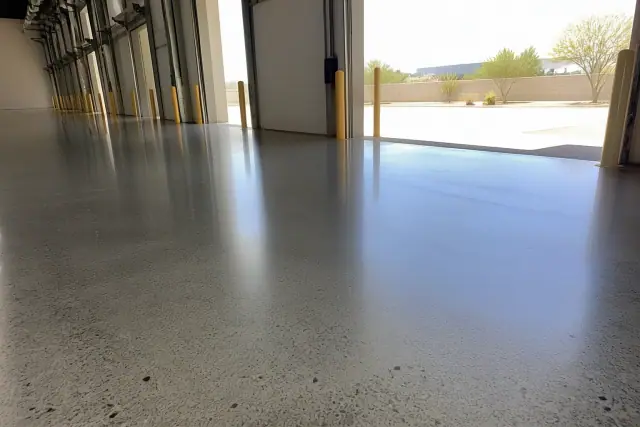
Diamond grinding removes the weakened surface layer, opens the slab, and exposes sound aggregate. A penetrating or film-forming sealer then protects the clean ground finish, creating a practical middle option between raw concrete and a thick resin build.

Request Estimate

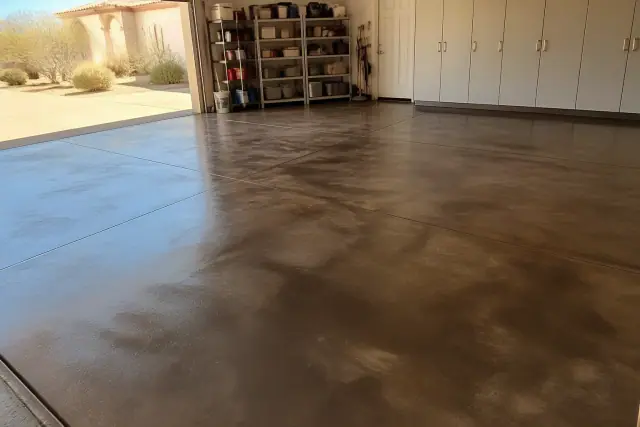
Concrete Staining

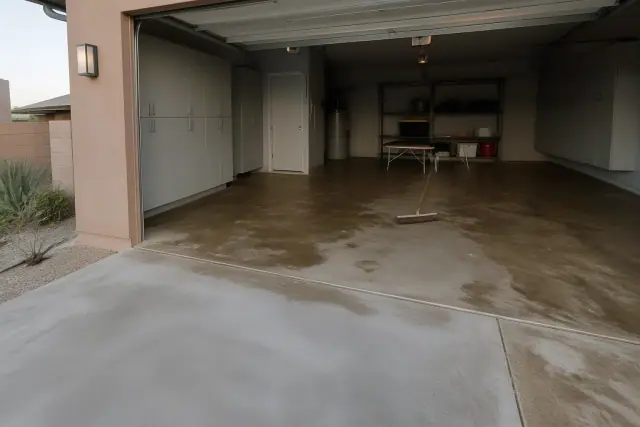
Stained concrete floor in a residential garage in Phoenix, AZ, with an open door showing desert landscaping.

Acid stains create natural, mottled color through a chemical reaction, while water-based stains offer a wider and more consistent palette. Saw-cut scoring can add tile- or flagstone-inspired patterns, and a UV-resistant exterior topcoat protects stained patios and pool decks.

Request Estimate

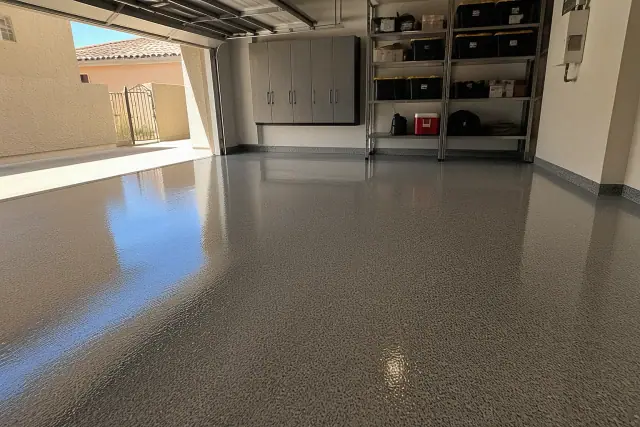
Epoxy and Polyaspartic Coatings

Glossy epoxy and polyaspartic garage floor coating with storage cabinets in a residential home in Phoenix, AZ.

Two-part epoxy resin creates a substantial bonded layer, while a clear polyaspartic polyurea topcoat improves UV stability and abrasion resistance. Polyaspartic materials cure in hours rather than days and tolerate a wider application temperature range than standard epoxy.

Request Estimate

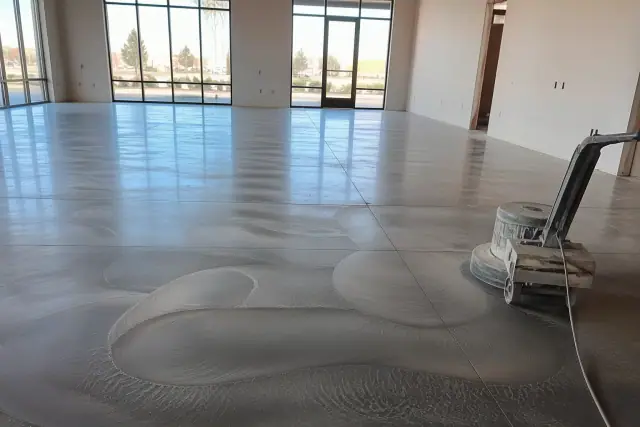
Polished Concrete

Polished concrete floor mid-process with grinding marks and a buffer in a retail space in Phoenix, AZ.

Polishing mechanically refines the slab through progressively finer diamond grits, often in eight to nine steps with a chemical densifier applied during the sequence. It can produce a satin or mirror-like finish without a topical resin film, making it useful where abrasion is a major concern.

Request Estimate

Garage Floor Systems

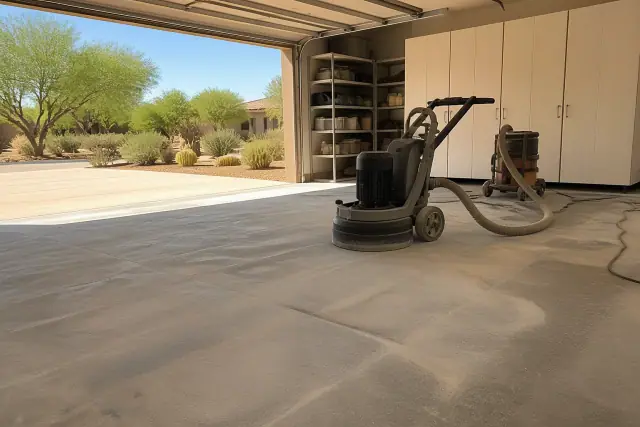
Concrete floor mid-grind with grinding equipment in a residential garage in Phoenix, AZ.

Residential garage systems can combine primer, a pigmented epoxy base, an optional multi-colored flake broadcast, and a clear polyaspartic topcoat. The layered build delivers more abrasion resistance and hot-tire pickup protection than thin garage floor paint, which typically fails within a year or two under Phoenix heat cycling.

Request Estimate

Commercial & Industrial Flooring

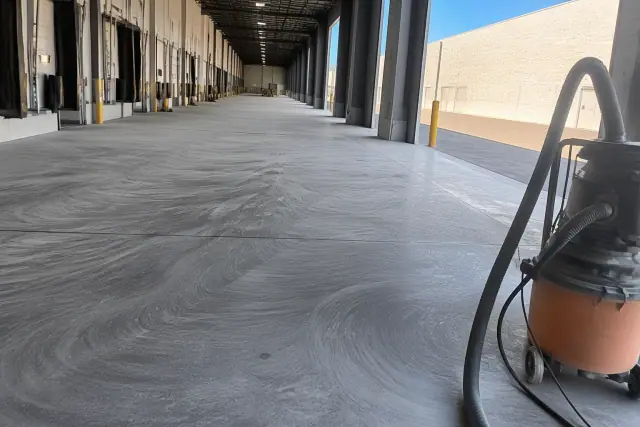
Concrete floor grinding and surface preparation in a Phoenix, AZ industrial warehouse.

Warehouses, showrooms, retail spaces, healthcare facilities, and commercial kitchens each need a system matched to traffic, cleaning, and chemical exposure. Options include self-leveling or trowel-applied epoxy, quartz or broadcast aggregate for grip, and chemical-resistant formulations specified with applicable ASTM International and OSHA performance considerations.

Request Estimate
Finish and Coating Options

Concrete Finish & Coating Options

Color chemistry, aggregate exposure, texture, sheen, coating thickness, and topcoat type all change how a concrete floor looks and performs. Physical sample boards help compare desert tones, warm amber, terracotta, cooler gray, and charcoal choices under the slab's actual lighting.

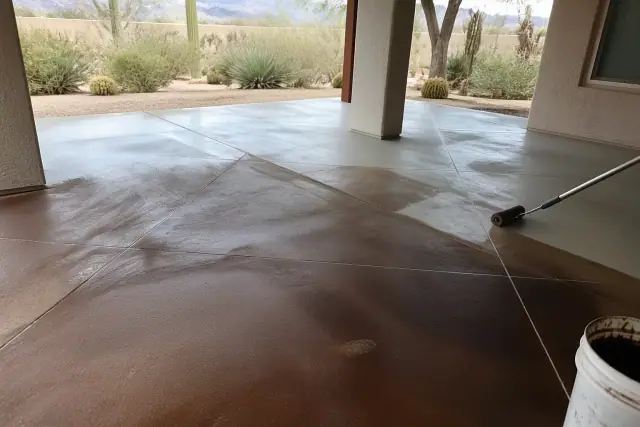
Acid-based reactive concrete stain being applied to a garage floor in Phoenix, AZ.

Acid-Based Reactive Stain

Acid stain reacts with lime in cured concrete to develop variegated, marbled color rather than laying down an opaque surface pigment. The final tone depends on slab chemistry and porosity, so natural variation is part of the finish.

  • Mottled, one-of-a-kind color movement
  • Chemical reaction within cured concrete
  • No topical color layer to peel
  • Suitable for patios, pool decks, and interiors
  • Paired with a use-appropriate sealer
Request Estimate
Concrete floor with scored lines and water-based stain on an outdoor patio in Phoenix, AZ.

Water-Based Stain and Scoring

Water-based penetrating stains provide a broader, more predictable palette than reactive acid colors. Saw-cut scoring can divide the slab into geometric fields that resemble tile or flagstone without installing a separate floor covering.

  • Broader range of color choices
  • More consistent color placement
  • Optional saw-cut tile patterns
  • Desert, terracotta, gray, and charcoal palettes
  • UV-resistant exterior topcoat options
Request Estimate
Grind and seal concrete floor with visible aggregate and sheen inside a warehouse in Phoenix, AZ.

Grind and Seal Finishes

Grind and seal uses a shorter mechanical sequence than full polishing and finishes the prepared slab with a penetrating or film-forming sealer. It delivers a clean exposed-concrete appearance with less labor than a multi-step mechanical polish.

  • Exposes sound aggregate and concrete texture
  • Removes degraded surface paste
  • Penetrating or film-forming sealer choices
  • Practical for garages and patios
  • Useful in lighter-use commercial spaces
Request Estimate
Freshly applied epoxy flake floor in a residential garage with desert landscaping visible outside in Phoenix, AZ.

Epoxy Flake and Polyaspartic

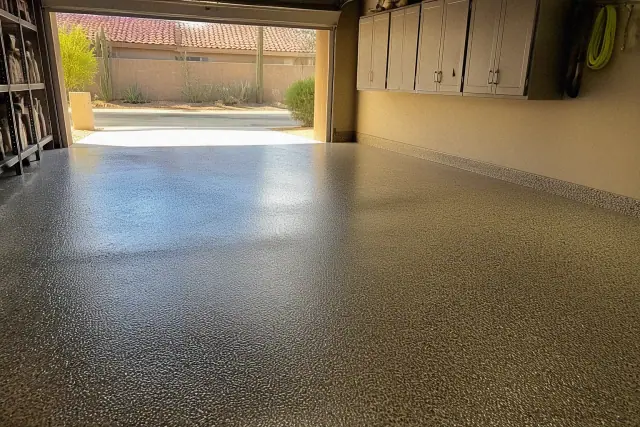
A pigmented epoxy base can receive a light or heavy broadcast of multi-colored flakes before a clear epoxy or polyaspartic topcoat seals the system. Flake density changes both appearance and texture, allowing more grip in garages and a cleaner visual in showrooms.

  • Pigmented epoxy base coat
  • Optional multi-colored flake broadcast
  • Adjustable texture and slip resistance
  • Clear UV-stable polyaspartic topcoat
  • Abrasion and hot-tire pickup resistance
Request Estimate
Metallic epoxy and polished concrete floor in a residential garage in Phoenix, AZ.

Metallic Epoxy and Polished Concrete

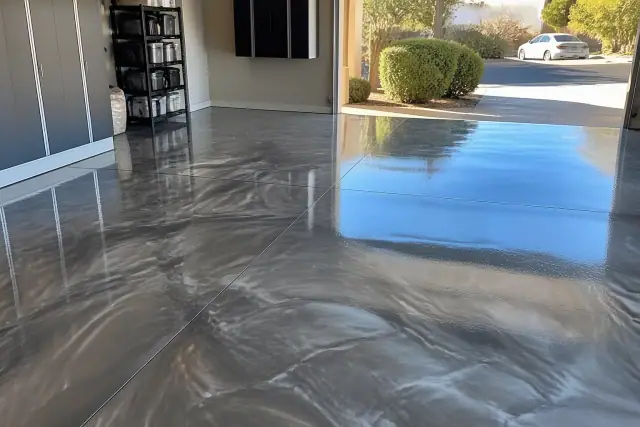
Metallic epoxy suspends mica-based pigments in clear resin for three-dimensional marbled effects, while polished concrete refines and densifies the slab itself. One emphasizes custom resin movement; the other creates a satin-to-gloss wear surface without a topical coating.

  • Mica-based metallic pigment movement
  • Three-dimensional marbled resin effects
  • Satin-to-high-gloss polished finishes
  • Chemical densifier option during polishing
  • Showroom, retail, and modern residential applications
Request Estimate
Finding the Right Fit

Choosing the Right Concrete Finish Approach

The right approach starts with slab moisture, porosity, cracks, previous coatings, sunlight, traffic, and chemical exposure. Staining offers flexible color at a lower initial build, grind and seal balances cost with a clean exposed-concrete finish, epoxy adds a thicker protective layer, and polishing serves high-abrasion settings without a topical film.

ICRI CSP Surface Preparation

Diamond grinding or shot blasting prepares each slab to the ICRI Concrete Surface Profile needed by the selected finish. Opening the pore structure and removing contamination addresses a primary cause of stain, sealer, and resin adhesion failure.

Phoenix-Climate Material Selection

UV exposure, summer heat, monsoon moisture, and mineral-heavy irrigation runoff all affect finish selection. Exterior stains receive a UV-resistant topcoat, polyaspartic can improve resistance to yellowing, and sealer formulations stay within Maricopa County Air Quality Department VOC limits.

Use-Specific Flooring Specifications

A patio, garage, showroom, warehouse, healthcare corridor, and commercial kitchen do not need the same floor build. We match coating thickness, texture, aggregate, abrasion resistance, cleanability, and chemical resistance to the traffic and exposure of the space.

What Sets Us Apart

Why Choose Phoenix Epoxy Co. for Concrete Finishing?

Projects are licensed under the Arizona Registrar of Contractors and begin with an in-person slab evaluation. We walk through moisture testing, preparation, physical color samples, finish build, and cure schedules before mixing a batch, then specify the system around the conditions the floor will actually face.

Request a Floor Estimate

Degraded and Spalled Concrete

Direct UV exposure can break down surface paste over successive summers, while moisture movement can contribute to pitting and spalling. Mechanical grinding removes the weakened layer so a finish starts on sound concrete rather than a failing surface.

Oil and Tire Contamination

Untreated garage slabs absorb oil and tire plasticizers that discolor concrete and interfere with coating adhesion. Older oil-soaked floors may need additional grinding and targeted preparation before they can accept stain, sealer, or resin evenly.

Cracks and Damaged Joints

Expansive clay and Phoenix heat cycling can leave cracks along control joints or across the field of a slab. Crack chasing and joint repair take place after evaluation and mechanical preparation, before the primer, base, or sealer is applied.

Slab Moisture and Efflorescence

Monsoon moisture and irrigation runoff can enter unsealed concrete, while moisture vapor moving upward may leave efflorescence as it evaporates in summer heat. Testing identifies moisture-compromised slabs that may require additional mitigation before a coating is selected.

UV and Heat Exposure

Phoenix patios, pool decks, and garages face prolonged sun and high slab temperatures that can change how a finish cures and ages. Acid-stain color resists peeling because it reacts within the slab, while UV-resistant sealers and polyaspartic topcoats help protect exposed finishes.

Early Coating Wear

Coatings can wear early when preparation, thickness, or material selection does not match the substrate and traffic. A properly ground profile, repaired concrete, and a specified primer-base-topcoat build reduce avoidable failures such as hot-tire pickup and under-performing wear layers.

How it works

Our Concrete Finishing Process

The core sequence remains consistent whether the project is a two-car garage or a 20,000-square-foot warehouse: evaluate moisture and use, mechanically prepare the slab, repair cracks and joints, then apply the chosen stain, sealer, polish, or primer-base-topcoat system. Each step is adjusted to the slab condition and performance requirements.

01.

Slab Evaluation and Moisture Testing

We inspect porosity, cracks, joints, oil, existing coatings, moisture, sunlight, traffic, and chemical exposure. For decorative work, physical sample boards allow color decisions under the slab's real lighting before the finish is specified.

02.

Mechanical Surface Preparation

Diamond grinding or shot blasting opens the pore structure and creates the ICRI CSP required by the selected material. This step removes weak surface paste, residues, and contamination that would undermine adhesion.

03.

Crack and Joint Repair

Cracks are chased and damaged joints are addressed after the slab has been opened and inspected. The repair scope is established before stain, sealer, primer, or resin application begins.

04.

Color or Base-System Application

The prepared slab receives the specified acid or water-based stain, penetrating sealer, densifier, primer, or pigmented epoxy base. Application follows the chosen chemistry, desired aggregate exposure, and the floor's required build.

05.

Decorative Finish and Topcoat

Scoring, flake broadcast, metallic pigment movement, texture aggregate, or progressive polishing builds the selected appearance and performance. Where applicable, a clear epoxy or polyaspartic topcoat seals the finished system.

06.

Cure Schedule and Maintenance Guidance

We explain the cure schedule before installation and review the maintenance needs of the completed floor. Sealed exterior stain may need periodic recoating, while polished concrete relies on routine dust mopping and periodic re-densifying rather than a topical film.

Start with the Slab

Plan Your Concrete Floor Estimate

A useful estimate begins with the slab rather than a generic per-square-foot number. Schedule an in-person evaluation to review condition, square footage, preparation, color or finish options, traffic, and the coating or sealer appropriate for the space.

Concrete Floor Help

Concrete Staining & Grind and Seal FAQs

These answers compare cost, preparation, longevity, coating thickness, maintenance, and finish choices for Phoenix concrete. A slab evaluation is still needed to confirm the right process and system for a specific property.

Call Our Experts

A basic single-color stain and sealer with minimal surface preparation typically runs $3 to $6 per square foot in the Phoenix market. Multiple colors, saw-cut scoring, or heavy decorative detailing can raise that range to $16 to $25 per square foot. Slab porosity, damage, and existing coatings determine how much preparation is required, so Phoenix Epoxy Co. quotes after seeing the floor in person.

Grind and seal is generally more budget-friendly than a full stain-and-score treatment or a multi-step mechanical polish. The price depends on the grinding sequence, crack repair, contamination, square footage, and whether the floor receives a penetrating or film-forming sealer. A firm number follows an on-site slab evaluation.

Acid-stain color can last as long as the concrete because it is a chemical reaction within the slab rather than a film that peels. The protective sealer wears first and typically needs recoating every one to three years on exterior surfaces exposed to Phoenix sun and monsoon moisture, with less frequent service indoors. Water-based color can show wear sooner in high-traffic areas if the topcoat is not maintained.

Basic staining is usually less expensive upfront because the existing slab remains the finished surface instead of receiving multiple resin coats. Epoxy with a base coat, optional flake broadcast, and polyaspartic topcoat costs more but adds a thicker wear layer, abrasion resistance, and chemical resistance. Staining often fits patios and interiors, while epoxy may provide better long-term value in garages and heavily used commercial spaces.

Grind and seal uses a shorter grinding sequence followed by a topical sealer. Polished concrete continues through progressively finer diamond grits, often adds a densifier, and creates sheen in the slab without a coating film. Polishing generally suits high-abrasion commercial use, while grind and seal costs less and installs faster for garages, patios, and lighter-use spaces.

A standard coating applied to an existing residential garage slab typically does not require a permit in Phoenix or surrounding municipalities because it is a surface finish rather than a structural change. Slab repair, moisture mitigation, or work tied to new construction can change the requirements by jurisdiction. Phoenix Epoxy Co. flags permit questions during the estimate when the project scope warrants it.

Standard residential epoxy is applied at roughly 10 to 20 mils per coat, while industrial or commercial self-leveling systems can run 60 to 125 mils depending on traffic and chemical exposure. Thicker is not automatically better; the substrate and use determine the correct build. Under-specified coatings can wear early in busy garages, kitchens, and facilities.

Choose acid stain when natural mottling and a chemical reaction within cured concrete suit the design. Water-based stain offers a broader, more consistent palette and works well with planned color placement or saw-cut scoring. Slab age, porosity, and actual lighting should guide the final sample choice.

Yes, grind and seal works well on garages, patios, and lighter-use commercial floors when the sealer matches the exposure. Exterior Phoenix slabs need a sealer selected for UV and moisture conditions, while garage floors also require attention to oil, tire plasticizers, and abrasion. Slab condition determines the grinding and repair scope.

Diamond grinding or shot blasting removes degraded paste, contamination, and old material while opening the concrete pore structure. Preparing to the applicable ICRI CSP gives a stain, sealer, primer, or resin the profile it needs. Surface preparation is critical because many adhesion failures start at the slab rather than in the product itself.

Polyaspartic cures in hours instead of days, tolerates a wider application temperature range, and resists UV yellowing better than standard epoxy. Epoxy provides a strong bonded base and allows pigment or flake broadcasts, so the materials are often combined. The selected build depends on exposure, cure needs, and the desired finish.

Retail spaces, warehouses, showrooms, healthcare facilities, and commercial kitchens need systems matched to abrasion, cleaning, chemicals, and slip resistance. Options include polished concrete, self-leveling or trowel-applied epoxy, quartz or aggregate broadcasts, and chemical-resistant formulations. Specification follows the traffic and exposure of the actual space, including relevant ASTM International testing and OSHA walking-working surface considerations.

Phoenix Epoxy Co. provides concrete staining, grind and seal, polished concrete, and epoxy flooring services across Phoenix, Scottsdale, Tempe, Mesa, Chandler, and Glendale. Available finish and coating options still depend on the slab, property use, and exposure conditions identified during the estimate.