Proudly serving Phoenix, Scottsdale, Mesa, Chandler, Gilbert, Tempe & surrounding areasCall or Text 24/7: 480-264-9663
Aerial view of a residential neighborhood with saguaros and desert foothills in Phoenix, AZ.

Epoxy Flake Flooring and Decorative Chip Systems in Phoenix, AZ

Phoenix Epoxy Co. installs epoxy flake flooring, garage floor epoxy, and commercial and industrial epoxy systems throughout Phoenix and the surrounding metro. We also offer metallic epoxy flooring, polyaspartic floor coatings, residential epoxy flooring, concrete polishing, concrete staining, and grind and seal finishes. Every flake installation uses a two-part epoxy system with catalyzed resin and hardener mixed to specification. Project planning starts with the condition of the slab and how the finished space will be used.

Uncovered Phoenix concrete can climb past 140°F, while the change from a 115°F afternoon to a cool, monsoon-soaked evening contributes to thermal cycling and hairline cracks. Hot tires, fine desert dust, and sudden moisture add more stress to an unprotected garage or work floor. We follow ICRI guidelines for concrete profile and moisture testing before primer reaches the slab. Our crews work under our Arizona Registrar of Contractors license, and we carry the insurance documentation homeowners and facility managers request.

If you are comparing epoxy with polyaspartic for a garage, patio, showroom, or warehouse, we can walk the slab with you before you commit. The goal is a coating matched to traffic, sun exposure, chemical exposure, design preferences, and the preparation the concrete actually needs.

Phoenix Epoxy Co. installs epoxy flake flooring throughout Phoenix and the surrounding metro, including Scottsdale, Tempe, Mesa, Glendale, and Chandler.

★ ★ ★ ★ ★4.9/5 Average Rating · 20+ Years of Experience · Thousands of Customers Helped · Licensed & Insured · Residential & Commercial

Epoxy Flake Flooring Options & Benefits

What Is Epoxy Flake Flooring?

Epoxy flake flooring uses colored vinyl or polymer chips broadcast into a wet epoxy base coat, then sealed beneath a clear epoxy or polyaspartic topcoat. The layered system adds decorative color and texture while protecting the concrete below.

A full broadcast creates a dense decorative surface, while a partial broadcast produces a lighter, speckled appearance. Flake blends come in dozens of color combinations, and the sealed finish can be glossy, matte, or satin.

The system works for residential and commercial spaces, from single-car garages in older Phoenix neighborhoods to Scottsdale showroom floors. Homes in Ahwatukee, Arcadia, and Laveen use flake systems where bare or painted slabs may fail within a couple of years.

Benefits of Epoxy Flake Flooring

A properly specified flake system combines concrete protection, practical texture, and a customizable finish for Phoenix garages, patios, walkways, showrooms, warehouses, and other working spaces.

  • Helps disguise imperfections in older concrete slabs
  • Resists hot-tire pickup with a commercial-grade resin system
  • Seals the surface against fine desert dust and routine staining
  • Offers full or partial flake broadcasts in varied color blends
  • Can add aluminum oxide grit for a more slip-resistant profile
  • Protects concrete from chemical staining and moisture intrusion
  • Supports UV-resistant polyaspartic or polyurethane topcoat options
  • Fits residential garages and high-traffic commercial floors
Floor Coating Services

Phoenix Epoxy Flooring Services

We install and finish floors for homes, garages, patios, showrooms, warehouses, manufacturing areas, commercial kitchens, and other interior or exterior concrete spaces. Each option below addresses a different balance of traffic, chemical exposure, UV exposure, downtime, maintenance, and appearance.

Garage Floor Epoxy

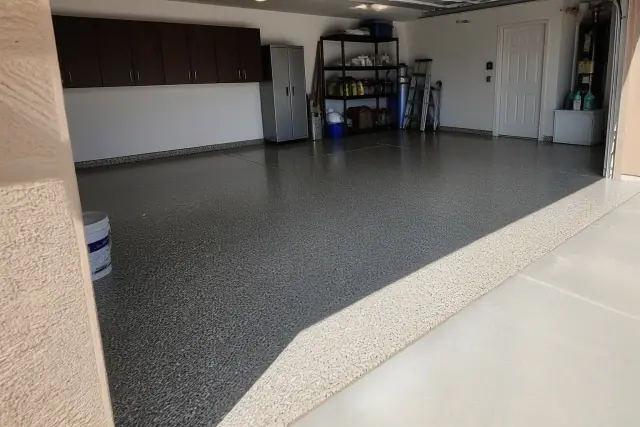
Finished epoxy garage floor with multi-colored resin flakes and a high-gloss finish in a Phoenix, AZ residence.

Garage floors face hot tires, oil drips, fine dust, and frequent vehicle traffic. We specify commercial-grade epoxy resin systems with heavier film builds than typical DIY kits and prepare the slab so the coating can bond under Phoenix conditions.

Request Estimate

Commercial and Industrial Epoxy Flooring

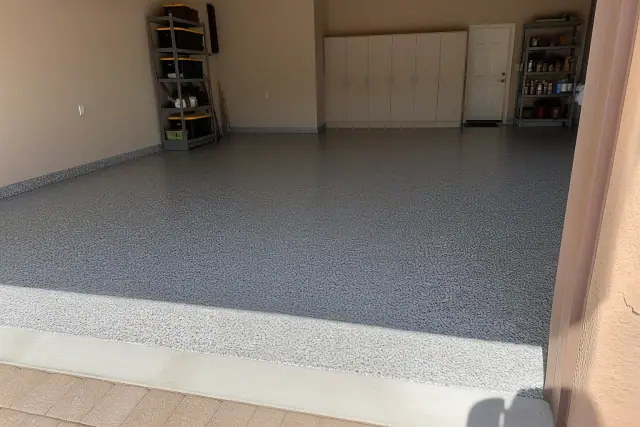
Completed epoxy flake flooring in a residential garage in Phoenix, AZ.

Warehouses and manufacturing floors may need higher-mil coatings, reinforced epoxy mortar, or high-build epoxy to handle forklift traffic, point-loading, abrasion, oil, and chemical spills. When a food-processing or commercial-kitchen project calls for it, USDA-certified epoxy formulations are available, and ASTM D4541 pull-off strength testing can confirm adhesion.

Request Estimate

Polyaspartic Floor Coatings

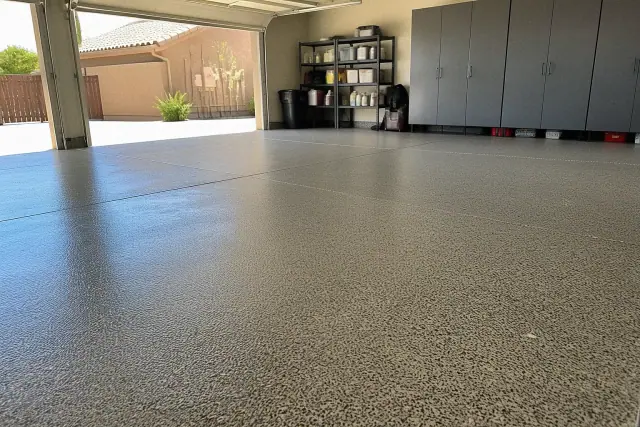
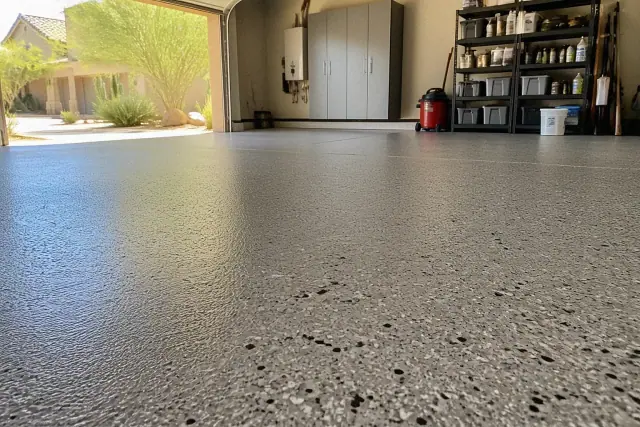
Gray epoxy flake garage floor with a glossy finish and beige stucco walls in a Phoenix, AZ home.

Polyaspartic coatings cure faster than standard epoxy and resist UV yellowing better, making them useful for garages and patios exposed to direct Phoenix sun. A hybrid system can pair an epoxy base and flake broadcast with a polyaspartic topcoat for faster return to service and improved color stability.

Request Estimate

Metallic Epoxy Flooring

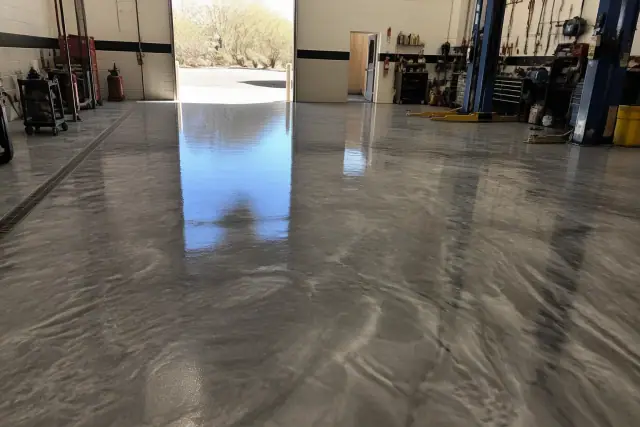
Metallic epoxy floor in an automotive workshop in Phoenix, AZ, with sunlight streaming through an open bay door.

Mica-based metallic pigments are folded into the resin and manipulated with tools, air movement, or solvent drops to form marbled, cloud-like patterns. No two pours look identical, making metallic epoxy a distinctive option for showrooms, custom homes, home offices, basements, and finished bonus rooms.

Request Estimate

Concrete Polishing

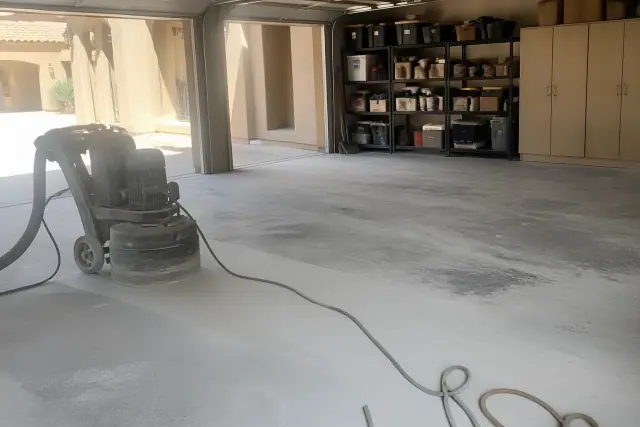
Concrete floor grinder and dust in a residential garage during a flooring project in Phoenix, AZ.

Polished concrete keeps the exposed-concrete appearance and offers a durable, lower-maintenance alternative for lower-traffic interior spaces. It does not provide the same chemical resistance as epoxy, so the right choice depends on how the room will be used.

Request Estimate

Concrete Staining and Grind and Seal

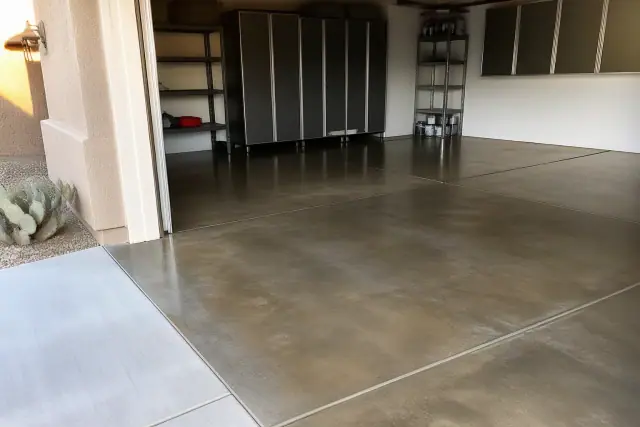
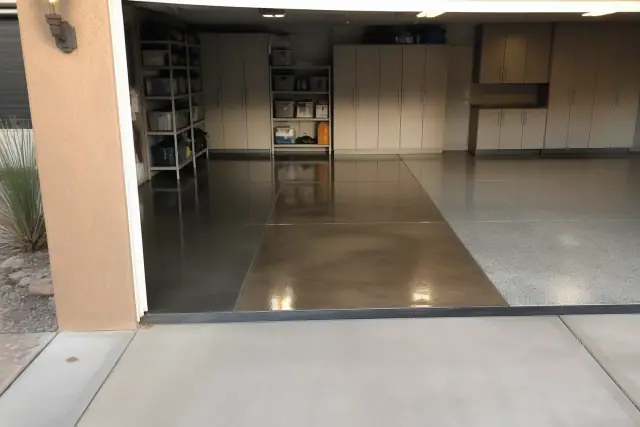
Finished epoxy flake garage flooring with stained concrete in a residential home in Phoenix, AZ.

Acid-based or water-based stains create variegated, natural-looking color for patios, walkways, and interiors. Grind and seal smooths the slab mechanically, then adds a penetrating sealer that protects against staining and dusting while retaining the concrete's natural appearance.

Request Estimate
Floor Finish Options

Types of Decorative Concrete Finishes

The best finish depends on the slab, desired texture, room use, exposure to sunlight or chemicals, and how quickly the space must return to service. Flake density, topcoat chemistry, color, sheen, and aggregate can all be adjusted within the supported systems.

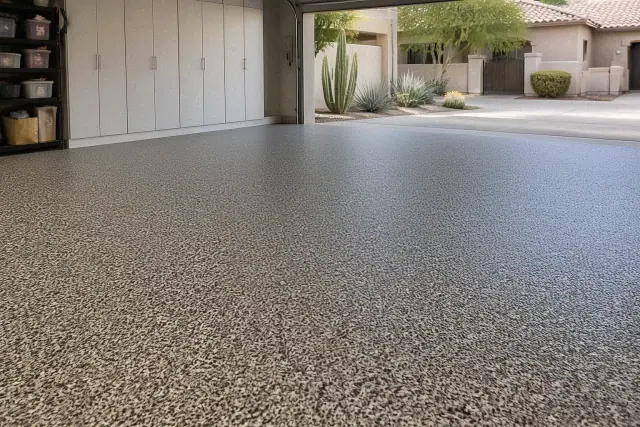
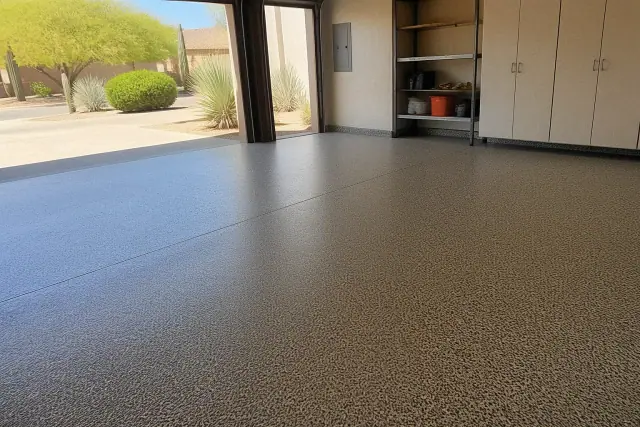
New epoxy flake flooring covering a residential garage floor in Phoenix, AZ, with desert landscaping visible outside.

Full-Broadcast Flake Floors

Flakes are broadcast into the wet epoxy base to full refusal, producing dense color coverage and a solid decorative texture. The cured surface is scraped and vacuumed before the clear topcoat seals the system.

  • Dense decorative chip coverage
  • Useful for disguising surface imperfections
  • Requires more flakes and labor than partial broadcast
  • Accepts clear epoxy or polyaspartic topcoats
  • Available with glossy, matte, or satin finish
Request Estimate
Partial-broadcast epoxy flake flooring installed in a residential garage in Phoenix, AZ.

Partial-Broadcast Flake Floors

A partial broadcast uses a lighter flake rate for a speckled finish that leaves more of the base color visible. It offers decorative texture without the visual density of full broadcast.

  • Lighter, more subtle flake texture
  • More base-coat color remains visible
  • Works for garages, patios, and walkways
  • Can combine with slip-resistant aggregate
  • Sealed beneath a clear protective topcoat
Request Estimate
Quartz and colored epoxy flake flooring installed in a residential garage in Phoenix, AZ.

Quartz and Colored Epoxy

Quartz epoxy and colored epoxy expand the decorative choices beyond a plain gray coating. They work well where color, texture, and practical wear resistance need to share the floor.

  • Decorative color beyond a plain gray topcoat
  • Textured options for interior or exterior spaces
  • Suitable for patios and walkways
  • Can be specified for commercial traffic
  • Pairs appearance with a sealed surface
Request Estimate
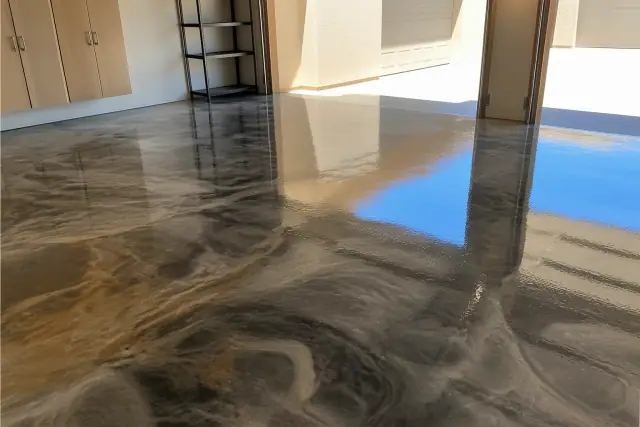
Metallic and hybrid epoxy garage floor with a high-gloss marbled finish in Phoenix, AZ.

Metallic and Hybrid Epoxy Designs

Metallic pours create marbled movement, while selected projects can combine a light flake broadcast with metallic pigment for extra texture and slip resistance. The blend preserves a custom appearance while adding practical surface character.

  • Mica-based pigments create visual depth
  • Application technique shapes each unique pattern
  • Light flake can add texture to a metallic pour
  • Popular for showrooms and finished interiors
  • Color combinations are chosen for the room
Request Estimate
High-gloss finished concrete floor in a residential garage in Phoenix, AZ.

Polished, Stained, and Grind-and-Seal Concrete

These alternatives retain more of the exposed-concrete look when a coating is not the right fit. They suit historic Phoenix homes, industrial-style interiors, patios, walkways, and lower-traffic rooms with different maintenance or chemical-resistance priorities.

  • Polishing creates a durable exposed-concrete finish
  • Stains produce variegated, natural-looking color
  • Grind and seal helps control staining and dusting
  • Exposed finishes require less long-term maintenance
  • Epoxy remains stronger for chemical resistance
Request Estimate
Finding Your Right Fit

Choosing the Right Floor Coating Approach

A good recommendation begins with the slab, not a preset package. We consider existing coatings, cracks, moisture, square footage, vehicle or forklift traffic, chemical exposure, direct sun, design goals, preferred sheen, and the downtime available before recommending epoxy, polyaspartic, metallic, quartz, or an exposed-concrete finish.

Surface Preparation and Moisture Testing

We follow ICRI guidelines for concrete profile and moisture testing before primer touches the slab. Mechanical grinding opens the pore structure and removes laitance; acid etching is reserved for surfaces where grinding is not practical.

Arizona-Licensed, Insured Crews

Every crew member on our jobs works under our Arizona Registrar of Contractors license. We also carry the insurance documentation homeowners and facility managers commonly ask to review before signing.

Floor Systems Matched to Use

A garage, showroom, warehouse, manufacturing floor, patio, and finished interior do not face the same wear. We match film build, flake density, topcoat, slip-resistant profile, and preparation to the actual traffic, chemical exposure, sunlight, and appearance the space requires.

What Sets Us Apart

Why Choose Us for Epoxy Flake Flooring Installation?

From 1970s slab construction to modern post-tension concrete, Phoenix floors can present very different preparation needs. We inspect before quoting, explain the tradeoffs between epoxy and polyaspartic, and build the installation around the floor's real condition rather than skipping the steps that support adhesion.

Request a Floor Assessment

Extreme Heat and Hot-Tire Pickup

Tires heated by a 115°F Phoenix afternoon can soften cheap coatings and pull material away from the slab. Commercial-grade epoxy resin and proper film build address heavier garage use more effectively than a thin, single-part coating.

Moisture Vapor Under the Slab

Slabs poured on grade without an effective moisture barrier can trap vapor beneath a coating. Moisture testing helps identify conditions that might otherwise push the coating off the concrete within months.

Peeling from Inadequate Preparation

Prior coatings, laitance, cracks, pinholes, and a surface that is too smooth can all interfere with adhesion. Skipping the inspection and profile work is a leading reason DIY epoxy projects peel within twelve to eighteen months.

Direct-Sun UV Exposure

Standard clear epoxy can amber or yellow under prolonged UV exposure, especially near west-facing garage doors. Polyaspartic and polyurethane topcoats resist that yellowing longer and are better suited to areas receiving direct sun.

Wet-Floor Slip Hazards

Condensation from evaporative cooling systems and water tracked inside during monsoon downpours can make a smooth coating slick. Polymer flakes or aluminum oxide grit can create a slip-resistant profile appropriate for the expected traffic.

Chemical Spills and Abrasion

Forklift steel wheels, oil drips, constant foot traffic, and chemical spills can wear through thin commercial coatings. Higher-mil builds, reinforced epoxy mortar, or high-build epoxy can be selected for point-loading, abrasion, and chemical attack.

How it works

Our Epoxy Flake Flooring Process

Every flake floor depends on the preparation and sequence beneath the final clear coat. We use the same core process whether the project is a 400-square-foot garage or a 3,200-square-foot commercial floor, then adjust materials and scheduling for slab condition, traffic, exposure, and finish.

01.

Inspect the Slab and Define the System

We walk the floor, confirm square footage, and check for existing coatings, cracking, moisture concerns, traffic, chemicals, sun exposure, and desired appearance. Those findings shape the preparation plan, flake density, film build, topcoat, schedule, and quote.

02.

Test Moisture and Prepare the Surface

Moisture vapor testing helps determine whether the slab needs additional protection before coating. We mechanically grind with diamond tooling to open the concrete pore structure and remove laitance, using acid etching only when grinding is not practical for the surface.

03.

Address Cracks and Remove Residue

The prepared slab is evaluated for cracks, prior coating residue, and other conditions that could interfere with adhesion. Dust and loose material are removed so the primer and base coat reach a clean, properly profiled surface.

04.

Mix and Apply the Epoxy Base

The two-part epoxy is mixed on site and applied at a controlled mil thickness. We spread it with a squeegee and back-roll the coating to reduce pinholes and create uniform coverage across the slab.

05.

Broadcast the Flake Blend

While the base is wet, flakes are broadcast to full refusal for dense coverage or at a lighter rate for a speckled finish. Full-broadcast systems use more material and labor, so flake density is reflected directly in the quote.

06.

Scrape, Seal, and Follow Cure Guidance

After the flakes cure, loose material is scraped and vacuumed away before a clear epoxy or polyaspartic topcoat seals the floor. We specify a glossy, matte, or satin finish and follow the applicable cure window before foot or vehicle traffic returns.

Plan Your Floor

Schedule an Epoxy Flake Flooring
Consultation

Tell us how you use the space, what the slab looks like today, and the finish you have in mind. We can inspect the floor, explain the differences among epoxy, polyaspartic, flake, metallic, quartz, polished, and stained options, and prepare a quote based on the actual square footage and prep needs.

Floor Coating Help

Epoxy Flake Flooring FAQs

These answers cover cost, preparation, system selection, cure time, maintenance, and common Phoenix performance concerns. Exact recommendations and pricing depend on the slab's condition, square footage, traffic, finish, and topcoat.

Call Our Floor Team

Most Phoenix flake systems run $5 to $10 per square foot installed; standard flake broadcasts often land around $5 to $6 per square foot, while premium metallic or quartz systems can run $8 to $13 per square foot. A basic coating for an average two-car garage is typically $1,200 to $2,400, a flake system with clear topcoat is closer to $2,000 to $3,200, and a heavier system with a polyaspartic upgrade can reach $2,500 to $5,000 or more. Square footage, grinding, moisture protection, flake density, and topcoat determine the final quote.

Epoxy is sensitive to preparation, moisture, and cure timing, so a poorly prepared slab may peel, bubble, or delaminate. A smooth finish can be slippery when wet unless flake or aggregate is added, and standard clear epoxy can yellow under prolonged UV exposure. Full-broadcast systems also cost more upfront than a basic single-color coating.

A 3,200-square-foot commercial or residential flake project typically falls between $16,000 and $32,000 at a $5 to $10 per square foot rate. That assumes standard grinding, a two-part epoxy base, full flake broadcast, and a clear epoxy or polyaspartic topcoat. Extensive crack repair, a moisture barrier, heavier industrial construction, or other preparation can move the bid higher.

A 20-by-20 garage is approximately 400 square feet and typically costs $2,000 to $4,000 for a full flake epoxy system with clear topcoat. A basic coating without flakes is closer to $1,200 to $2,400 for the same footprint. The exact figure depends on slab preparation, flake density, and whether the topcoat is upgraded to polyaspartic.

Standard epoxy may need 24 to 72 hours between coats and 3 to 5 days before vehicle traffic, depending on temperature, humidity, and the specified product. Polyaspartic chemistry can often support a single-day installation, foot traffic within hours, and vehicle traffic within a day or two. We follow the manufacturer's cure window rather than rushing the floor.

Yes, a clear epoxy or polyaspartic coat can add thickness, improve chemical resistance, or refresh the sheen on a sound flake floor. The cured surface must first be lightly scuffed or sanded so the new coat can bond. Recoating will not correct underlying delamination, so damaged areas should be inspected first.

Epoxy generally costs less, provides strong chemical resistance, and cures more slowly. Polyaspartic costs more per square foot, cures faster, and resists UV ambering better. A common hybrid uses epoxy beneath the flakes and polyaspartic as the protective topcoat.

We inspect for cracks, moisture, prior coatings, and other bond concerns, then mechanically grind with diamond tooling to open the pore structure and remove laitance. Moisture vapor testing is completed before primer, following ICRI guidance for profile and testing. Acid etching is used only when grinding is not practical for the surface.

Full broadcast adds flakes to refusal for dense decorative coverage, while partial broadcast uses fewer chips for a lighter speckled effect. Full broadcast requires more material and labor, so it affects the quote. Both are sealed with a clear epoxy or polyaspartic topcoat.

Yes. Polymer flakes add texture, and aluminum oxide grit can be incorporated into the topcoat for a more slip-resistant profile. The amount and texture should reflect the expected foot, vehicle, or commercial traffic.

The clear topcoat can be specified in a glossy, matte, or satin finish, depending on the selected system and preference. Flake blends are available in dozens of color combinations, with full or partial broadcast controlling the density of the decorative pattern.

Supported applications include residential garages, patios, walkways, home offices, basements, bonus rooms, showrooms, warehouses, manufacturing floors, and commercial kitchens. The system changes with traffic, chemicals, sun exposure, maintenance priorities, and the condition of the slab.

Standard clear epoxy can amber or yellow with prolonged UV exposure, particularly near west-facing garage doors and on sunlit patios. Polyaspartic and polyurethane topcoats resist yellowing longer, so they are recommended for spaces that receive direct sunlight.