Proudly serving Phoenix, Scottsdale, Mesa, Chandler, Gilbert, Tempe & surrounding areasCall or Text 24/7: 480-264-9663
Aerial view of a residential neighborhood with saguaros and desert foothills in Phoenix, AZ.

Garage Floor Epoxy and Concrete Coating Installation in Goodyear, AZ

Phoenix Epoxy Co. installs garage floor epoxy, garage floor coatings, polyaspartic floor coatings, and decorative flake and metallic finishes in Goodyear, Arizona. We serve homeowners and businesses with residential, commercial, and industrial epoxy flooring, plus concrete polishing, staining, and grind-and-seal options. Each project starts with the slab condition, traffic, and finish goals rather than a one-size-fits-all coating. Our work covers Goodyear and supported communities throughout the West Valley.

Garage slabs here face surface temperatures over 120 degrees, monsoon vapor, and movement from caliche and expansive clay soils. Those conditions can contribute to cracks, pitting, bubbling, or premature delamination when preparation and joint work are skipped. We test moisture and pH, mechanically profile the concrete, and recommend a system based on the actual readings. Arizona Registrar of Contractors licensing and full liability insurance support every residential and commercial job.

Goodyear grew from 95,294 residents at the 2020 census to an estimated 118,186 in 2024, leaving many relatively young garage slabs that may continue releasing moisture vapor for months.

★ ★ ★ ★ ★4.9/5 Average Rating - 20+ Years of Experience - Goodyear Epoxy Flooring Contractor Specialists - Residential & Commercial
Epoxy & Concrete Services
Flooring Services for Goodyear, AZ

Select a coating or concrete finish around the slab condition, expected traffic, cleaning routine, and desired appearance. For a comparable desert-climate service overview, see our Scottsdale, AZ location page.

Garage Floor Epoxy

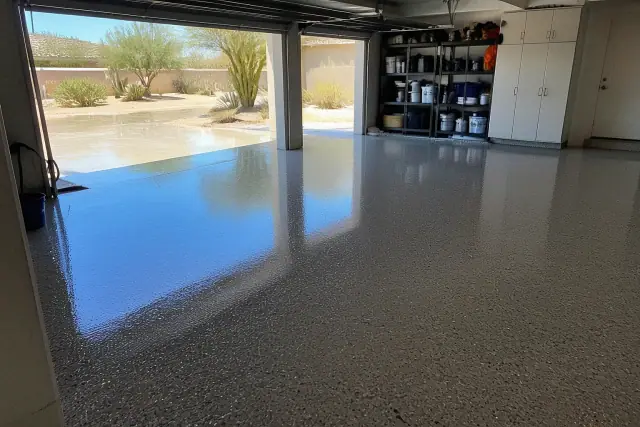
Fresh glossy garage floor epoxy in a residential garage in Goodyear, AZ with desert landscape visible outside.

Two-component garage floor epoxy creates a nonporous surface for daily vehicle traffic, hot tires, and common automotive or pool chemicals. We prepare the concrete before installing the selected solid-color, flake, or metallic build.

Explore Service

Garage Floor Coatings

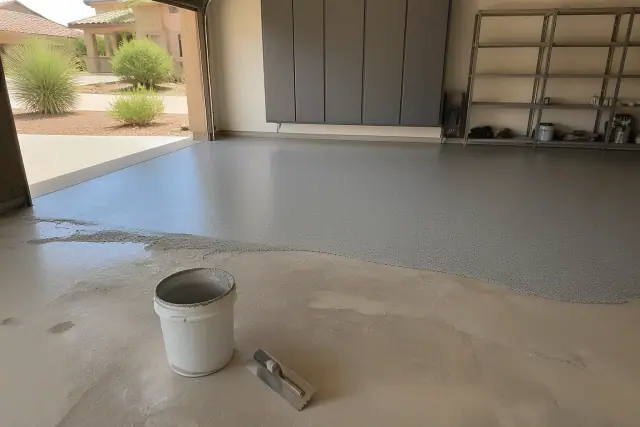
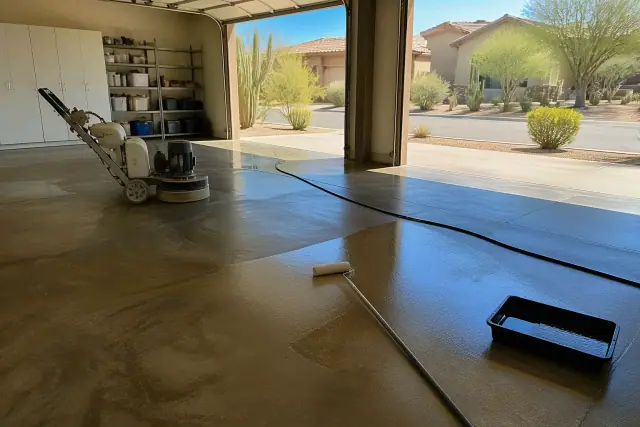
Epoxy flooring being applied in a residential garage in Goodyear, AZ with tools visible and desert landscape outside.

Garage floor coatings can be matched to a slab's use, condition, and finish goals. Options include epoxy base coats, UV-stable topcoats, solid colors, textured broadcasts, and low-VOC formulas for garages, patios, and interior concrete.

Explore Service

Polyaspartic Floor Coatings

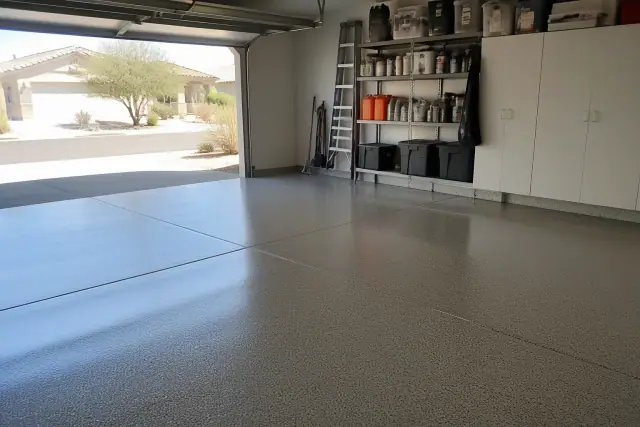
Completed polyaspartic floor coating inside a residential garage in Goodyear, AZ.

Polyaspartic and polyurea coatings cure in hours rather than days, helping installations fit tighter schedules when summer heat shortens a standard epoxy's working window. A polyaspartic topcoat also improves UV stability and chemical resistance.

Explore Service

Epoxy Flake Flooring

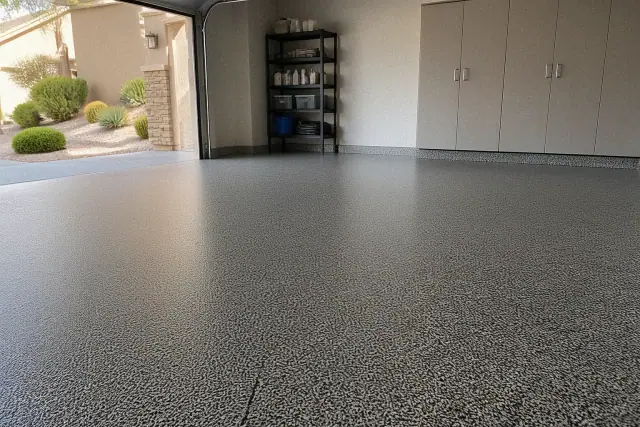
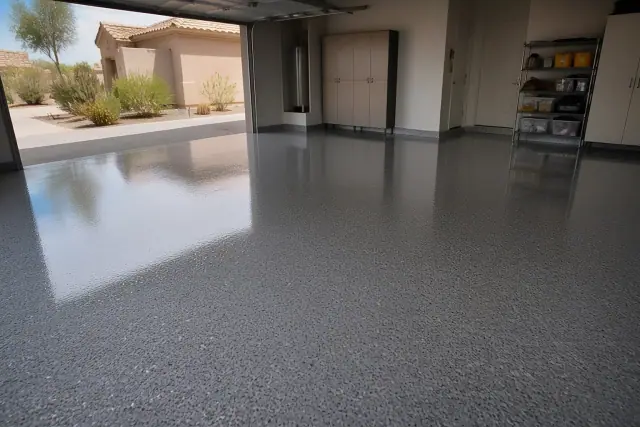
Epoxy flake flooring inside a residential garage in Goodyear, AZ with storage cabinets and desert landscaping visible.

A full flake broadcast adds texture, traction, and color while helping disguise minor imperfections, tire marks, and debris between cleanings. It is the most requested finish for two- and three-car garages, with custom chip blends available to coordinate with trim or doors.

Metallic Epoxy Flooring

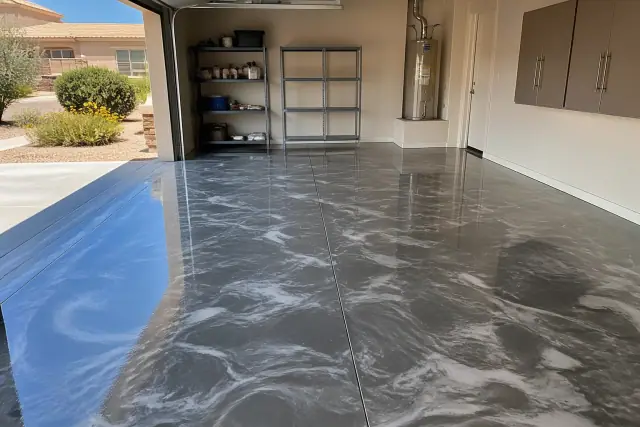
Metallic epoxy flooring with a glossy, marble-like finish in a residential garage in Goodyear, AZ.

Mica pigments suspended in clear epoxy create a dimensional, marbled floor with movement and depth. Each metallic pour is manipulated by hand, so no two finished floors look identical; this premium option suits garages used as showrooms or workspaces.

Commercial Epoxy Flooring

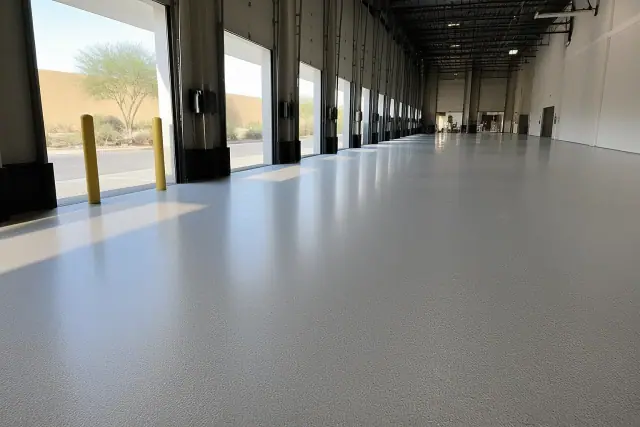
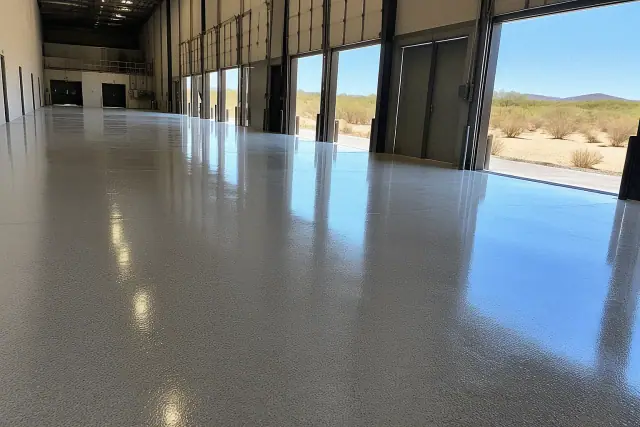
Glossy commercial epoxy flooring in an industrial warehouse aisle in Goodyear, AZ.

Retail shops, restaurants, and offices along Litchfield Road and PebbleCreek Parkway need floors that tolerate foot traffic, rolling carts, frequent cleaning, and commercial chemicals. Installations can be scheduled overnight or on weekends to reduce disruption to operating hours.

Industrial Epoxy Flooring

Newly installed industrial epoxy flooring in a warehouse building in Goodyear, AZ.

Warehouses and distribution facilities near Phoenix Goodyear Airport and Van Buren Street may require higher-mil systems with aggregate reinforcement. These industrial coatings are designed around forklift traffic, pallet jacks, abrasion, and repeated load cycling.

Residential Epoxy Flooring

Completed residential epoxy flooring with a high-gloss flake finish in a garage in Goodyear, AZ.

Residential epoxy flooring protects garages, patios, and interior concrete while offering solid-color, flake, and metallic designs. The system is selected around daily use, the home's finish, the slab's condition, and the available budget.

Concrete Polishing

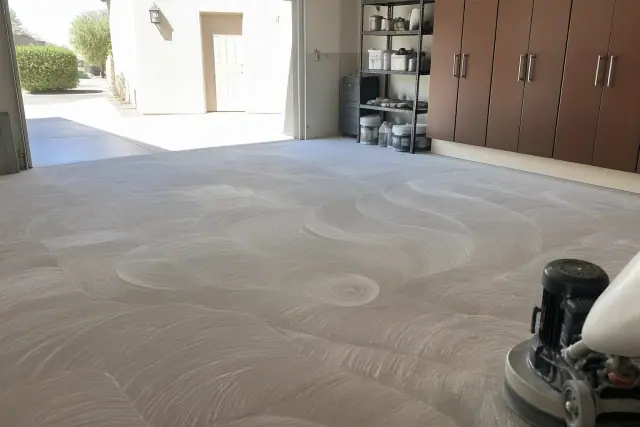
Technician polishing a residential garage concrete floor in Goodyear, AZ with visible sanding marks and dust.

Diamond abrasives refine exposed concrete to a satin or high-gloss finish without a full coating build-up. Polished concrete is a practical option for modern interiors and retail spaces and resists staining better than raw concrete.

Concrete Staining & Grind and Seal

Concrete floor staining and polishing in progress inside a residential garage in Goodyear, AZ.

Acid- or water-based stains add variegated, translucent color to patios, walkways, and interior floors before a sealer locks in the finish. Grind-and-seal offers a more natural concrete appearance with added protection, and the final sealer helps defend the surface against Arizona UV exposure.

System Selection

How to Choose a Floor Coating in Goodyear

A durable floor begins with the right preparation and coating build for the concrete, not simply a color choice. Compare surface profiling, moisture readings, traffic, cure time, finish texture, and repair needs before choosing a system.

Mechanical Surface Preparation

Diamond grinding opens the concrete's pore structure and removes dust, grease, weak material, and incompatible coatings. We prepare epoxy-bound slabs to an ICRI CSP 3 profile so the base coat can bond to mechanically profiled concrete.

Moisture and pH Testing

Newer pours and slabs affected by monsoon moisture can transmit vapor from below. Testing moisture content and pH before coating shows whether a moisture barrier is warranted instead of adding one without evidence.

Traffic and Coating Build

A daily-use residential garage, restaurant, showroom, and forklift aisle place different demands on a floor. Resin grade, aggregate, specified mil thickness, and chemical-resistant topcoats should match the expected traffic and cleaning routine.

Cure Schedule and Temperature

Goodyear's summer heat can shorten epoxy working time, while the chosen topcoat affects how soon a floor returns to service. Polyaspartic options are useful when a faster cure or better UV stability matters.

Finish, Texture, and Traction

Solid color provides a clean look, full flake adds texture and helps hide debris, and metallic epoxy creates a hand-finished marbled effect. Gloss, matte, color blend, and traction needs should reflect how the garage or business space is actually used.

Crack, Spall, and Joint Repair

Cracks, spalling, and control joints need attention before the decorative build begins. Polyurea or epoxy filler can address suitable repairs, while routed and filled joints help the coating accommodate the slab details instead of hiding them.

Goodyear Slab Issues

Common Garage Floor Problems in Goodyear

Heat, UV exposure, vehicle fluids, monsoon moisture, and moving soils can expose weaknesses in bare concrete or poorly prepared coatings. An on-site slab inspection helps identify the failure mechanism before another coating is applied.

Request a Slab Inspection

Hot-Tire Pickup and Peeling

Hot tires can expose thin material, weak resin, or poor adhesion, especially when a coating was applied over dust and grease. In local failure calls, painted or lightly prepared floors have sometimes lifted within a year.

Moisture Vapor and Bubbling

Monsoon water entering near a slab edge or unsealed expansion joint can drive vapor upward. Without testing and a suitable barrier where readings call for one, pressure beneath the coating may cause bubbles or delamination.

UV Chalking and Heat Cycling

Goodyear can move from freezing winter overnight lows to summer highs above 110 degrees. That temperature range, combined with desert UV, can contribute to hairline cracks, surface pitting, yellowing, and chalking within a few seasons when the surface is unsealed or the topcoat is not suitable.

Oil and Chemical Stains

Porous concrete can absorb oil, transmission fluid, brake dust, and pool chemicals, leaving permanent stains within days rather than weeks. A nonporous coating makes routine cleanup faster and helps keep those materials at the surface.

Cracks, Spalling, and Pitting

Young slabs, repeated heat cycling, and prior coating failures can leave hairline cracks, pitted areas, or spalled concrete. Grinding and appropriate repair are needed before a new base coat; structurally compromised areas may require additional concrete work.

Control-Joint and Slab Movement

Caliche and expansive clay soils across the West Valley can contribute to slab movement. Routing and filling control joints correctly is more reliable than coating over them and hoping a rigid finish will conceal future movement.

Why Choose Us

Why Choose Phoenix Epoxy Co. in Goodyear?

Phoenix Epoxy Co. is a family-owned epoxy company with roots in the Phoenix metro and experience with both older Goodyear concrete and recently poured subdivision slabs. Our recommendations account for local temperature, moisture, soil movement, use, and finish goals.

Arizona Licensed and Insured

We hold Arizona Registrar of Contractors licensing and carry full liability insurance on residential and commercial work. Those credentials apply across Goodyear and the surrounding West Valley.

Local Slab and Climate Experience

Slabs poured decades ago and brand-new concrete still curing require different testing and preparation. Familiarity with Goodyear's heat, monsoon moisture, caliche, and expansive soils helps shape the repair and coating plan.

Clear Testing and Repair Scope

We inspect the slab, record moisture and pH conditions, and identify old coatings, cracks, spalling, and joints before pricing the build. Where structural crack repair or slab modification requires it, we pull permits and follow Maricopa County building code.

Slab-to-Finish Process

Our Epoxy Flooring Installation Process in Goodyear

Each installation moves from evaluation and mechanical preparation through repair, coating, topcoat, and cure. The exact sequence changes with the slab readings and selected solid-color, flake, metallic, commercial, or industrial build.

01.

Inspect, Test, and Estimate

We provide a free on-site estimate, inspect for sealers or failed coatings, evaluate cracks and spalling, and test moisture readings and pH. A same-day quote then reflects slab condition, square footage, repairs, finish, and topcoat needs.

02.

Diamond Grind and Remove Coatings

Diamond grinding removes old paint or epoxy where needed and profiles the exposed concrete. Dust, grease, weak surface material, and grinding residue are cleared before repair or coating begins.

03.

Repair Cracks and Control Joints

Cracks, spalls, and suitable joints are repaired with polyurea or epoxy filler, and control joints are routed and filled correctly. If vapor testing indicates a need, a moisture-barrier layer is included before the base coat.

04.

Install the Base Coat and Finish

The base coat is installed at the specified mil thickness for the selected system. Flake is broadcast into the wet coat, metallic pigment is manipulated by hand, or a solid-color finish is left uniform.

05.

Refine and Apply the Topcoat

Excess flake is scraped and vacuumed before one or two polyaspartic or polyurethane topcoats add UV stability and chemical resistance. Edges and details around drains, floor boxes, and wall bases are cut in as part of the finish.

06.

Cure and Return to Service

Most residential garage projects finish in one to two days, depending on the system and cure conditions. Polyaspartic topcoats may allow foot traffic the same day and vehicle traffic within 24 to 72 hours, while some traditional epoxy systems require a full week before vehicle use.

Finish and Use Examples

Practical Flooring Outcomes for Goodyear Properties

Case Study 1: Daily-use garages: A full flake broadcast adds traction and helps hide tire marks or debris while a chemical-resistant topcoat simplifies routine cleanup.

Case Study 2: Showrooms and interiors: Hand-worked metallic epoxy creates a dimensional focal point, while polished concrete offers a satin or high-gloss exposed finish.

Case Study 3: Commercial and warehouse floors: Higher-mil builds, aggregate reinforcement, and compatible topcoats can be selected around rolling carts, cleaning chemicals, forklifts, and pallet jacks.

Plan Your Project

Plan Your Goodyear
Flooring
Estimate

Request a free on-site estimate for a Goodyear garage, patio, interior, retail, restaurant, office, warehouse, or industrial floor. We will inspect the concrete and explain how surface condition, repair needs, finish, and topcoats affect the recommended build and exact price.

Goodyear Flooring Help

Garage Floor Epoxy FAQs for Goodyear, AZ

These answers cover pricing, durability, preparation, finishes, scheduling, and local slab conditions. A site visit is still the best way to match a coating to the concrete and intended use.

Call Our Flooring Team

Garage floor epoxy typically costs $4 to $9 per square foot for labor and materials. A standard two-car garage of 400 to 500 square feet often totals $2,000 to $4,500, while premium polyaspartic, full-flake, or metallic builds can range from $4,500 to $7,000. Slab condition, repairs, size, design, and topcoat count affect the final estimate.

A professionally prepared epoxy or polyaspartic system typically lasts 10 to 20 years under normal residential use in Goodyear. DIY kits often last 3 to 5 years because thinner material and limited surface preparation can make them more vulnerable to peeling, yellowing, and delamination.

Most residential garage installations take one to two days from grinding through the final topcoat. With a polyaspartic topcoat, foot traffic may resume the same day and vehicles can typically return within 24 to 72 hours. Some traditional epoxy systems require a full week before vehicle traffic.

Yes, in many cases, after the slab is properly prepared. We grind away staining or incompatible coatings and repair suitable cracks with polyurea or epoxy filler before the new system is installed. Severely spalled or structurally compromised concrete may need additional repair first.

That depends on the slab's age, location, and moisture test results. New concrete and lower-lying properties can be more susceptible to vapor transmission during monsoon season. We test every slab and recommend a moisture barrier only when the readings indicate it is needed.

Epoxy provides strong adhesion and chemical resistance but cures more slowly and is more temperature-sensitive during application. Polyaspartic and polyurea coatings cure in hours and offer better resistance to UV yellowing. A common high-performance build combines an epoxy base coat with a polyaspartic topcoat.

Yes. Phoenix Epoxy Co. holds Arizona Registrar of Contractors licensing and carries full liability insurance for residential, commercial, and industrial flooring work in Goodyear and the surrounding West Valley.

A full flake broadcast is the most requested option for daily-use garages because it adds texture, improves traction, and helps hide tire marks and debris. Solid color provides a simpler uniform appearance, while metallic epoxy is suited to a more decorative showroom-style finish.

Diamond grinding removes weak surface material, old residue, and contaminants while opening the concrete's pore structure. For epoxy-bound slabs, we prepare to an ICRI CSP 3 profile so the base coat can adhere to mechanically profiled concrete rather than dust or a smooth sealer.

Yes. Failed paint and old epoxy can be removed with diamond grinding equipment before the slab is repaired and recoated. Removing the incompatible layer is important because a new system is only as reliable as the surface beneath it.

Yes. Retail, restaurant, and office flooring can often be scheduled overnight or on weekends to reduce operational disruption. The system is selected around foot traffic, rolling carts, cleaning chemicals, cure time, and the required return-to-service window.

Concrete polishing uses diamond abrasives to refine exposed concrete to a satin or high-gloss finish. Acid- or water-based staining penetrates the slab with variegated, translucent color and is then sealed. Both can suit interiors or commercial spaces when a full epoxy build is not the desired look.

We serve Goodyear communities including Estrella Mountain Ranch, PebbleCreek, Palm Valley, Canyon Trails, and Village at Prasada. Standard-radius service also extends to Litchfield Park, Avondale, Buckeye, Verrado, and much of southwest Maricopa County without an added trip charge.

A properly installed nonporous system resists oil, antifreeze, brake fluid, and pool chemicals and makes spills easier to mop than on raw concrete. Commercial projects can also use chemical-resistant topcoats selected around stronger cleaning products and the site's traffic.

Yes. Low-VOC coating formulas and eco-friendly flooring options are available for Goodyear homeowners who want less installation odor. We can discuss the household, space, cure conditions, and performance needs when selecting the system.