Proudly serving Phoenix, Scottsdale, Mesa, Chandler, Gilbert, Tempe & surrounding areasCall or Text 24/7: 480-264-9663
Aerial view of a residential neighborhood with saguaros and desert foothills in Phoenix, AZ.

Garage Floor Epoxy and Custom Concrete Finishing in Glendale, AZ

Phoenix Epoxy Co. installs garage floor epoxy, garage floor coatings, and polyaspartic floor coatings for homes and businesses in Glendale, Arizona. We also build epoxy flake, metallic, commercial, industrial, and residential flooring systems, then finish concrete with polishing, staining, or grind-and-seal methods. Each system is matched to the slab condition, traffic load, sun exposure, and budget. Our work covers garages, retail units, showrooms, warehouses, patios, laundry rooms, workshops, and interior living areas.

Glendale pavement temperatures regularly climb past 150°F, transferring heat into unsealed garage slabs and accelerating hot-tire marking or paint-grade coating failure within a season or two. High UV exposure can yellow standard epoxy, while monsoon humidity can drive moisture vapor through older concrete. Clay-heavy Maricopa County soils can also contribute to slab movement that needs careful crack and joint treatment. We diamond-grind the concrete, test moisture, and select primers and topcoats around those local conditions before coating begins.

We work across Arrowhead Ranch, Sahuaro Ranch, Historic Downtown Glendale, Coyote Country, Stetson Hills, and the areas around State Farm Stadium and Westgate Entertainment District. Request a free on-site estimate so we can inspect the slab, measure the space, and explain suitable options before you commit.

★ ★ ★ ★ ★4.9/5 Average Rating - 20+ Years of Experience - Glendale Epoxy Flooring Contractor Specialists - Residential & Commercial
Flooring Services

Floor Coating Services in Glendale, AZ

The right finish depends on the slab, traffic, sunlight, desired appearance, and available downtime. Our Glendale options range from durable garage systems to decorative concrete and heavier commercial or industrial builds. We also bring these flooring options to property owners in nearby Peoria, AZ .

Garage Floor Epoxy

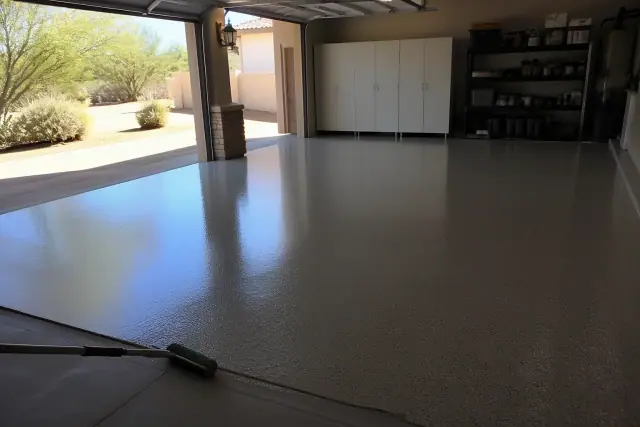
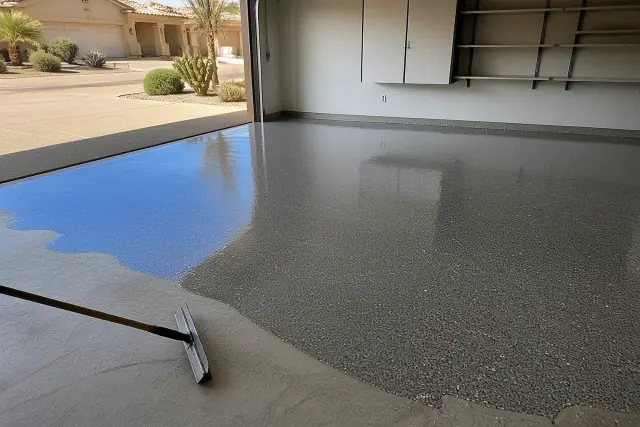
Wet garage floor epoxy with decorative flakes being applied in a residential garage in Glendale, AZ.

A properly profiled slab receives a 100% solids epoxy base coat and a chemical-resistant topcoat that resists hot-tire pickup, oil, and coolant better than paint-based alternatives. We size the system for single-bay and two-car garages.

Explore Service

Garage Floor Coatings

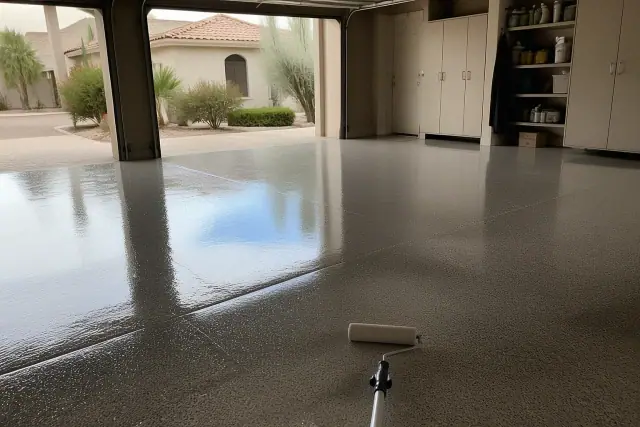
Freshly applied epoxy garage floor coating in a Glendale, AZ residential garage.

We combine slab preparation, crack treatment, a base coat, an optional broadcast layer, and a protective topcoat into a system suited to the floor's condition and traffic. Coating choices are explained against budget, grip, UV exposure, and expected use.

Explore Service

Polyaspartic Floor Coatings

High-gloss polyaspartic floor coating on a residential garage floor in Glendale, AZ.

Polyaspartic coatings cure in hours instead of days, reducing downtime for garages and shops. Their stronger resistance to UV yellowing makes them useful where open garage doors expose the floor to direct Glendale sunlight.

Explore Service

Epoxy Flake Flooring

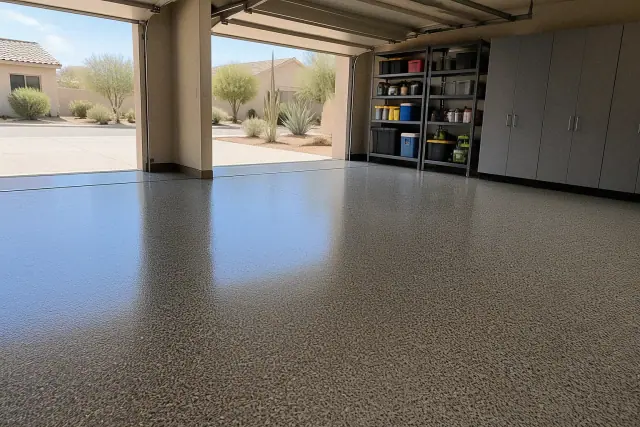
Epoxy flake flooring installed in a residential garage in Glendale, AZ.

Colored vinyl chips add texture and slip resistance while helping disguise imperfections in older slabs. Flake blends and broadcast densities can be adjusted for the appearance and grip wanted in garages, patios, and basements.

Metallic Epoxy Flooring

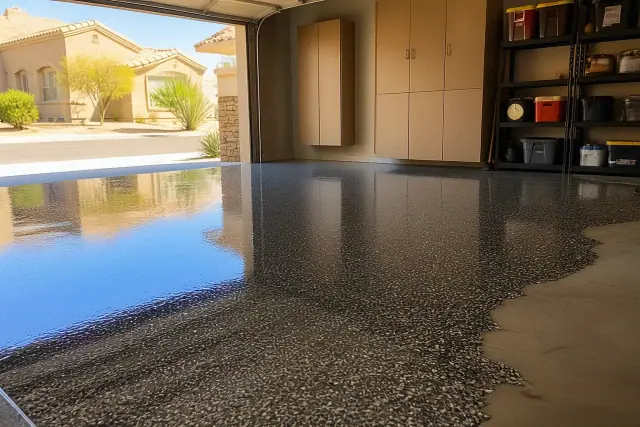
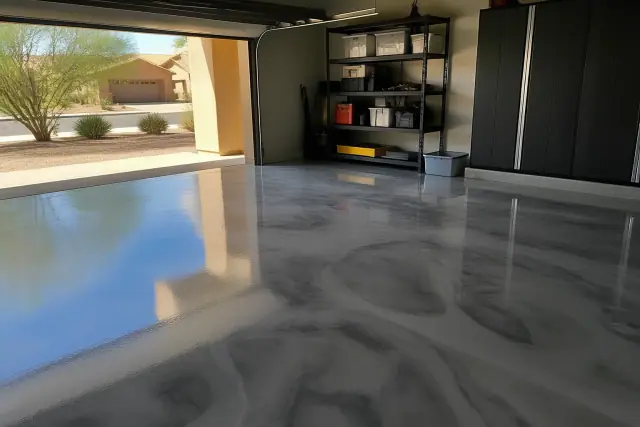
Completed metallic epoxy flooring in a residential garage in Glendale, AZ with views of desert xeriscaping outside.

Mineral pigments suspended in clear epoxy create a three-dimensional marbled finish for custom garages, showrooms, and entertaining spaces. Each pour is hand-manipulated and sealed with a durable topcoat for daily wear.

Commercial Epoxy Flooring

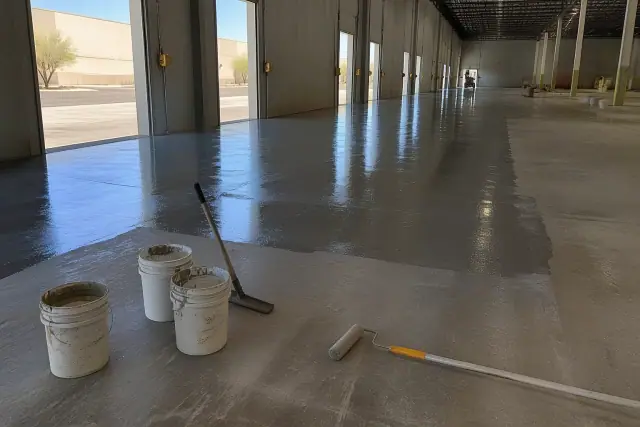
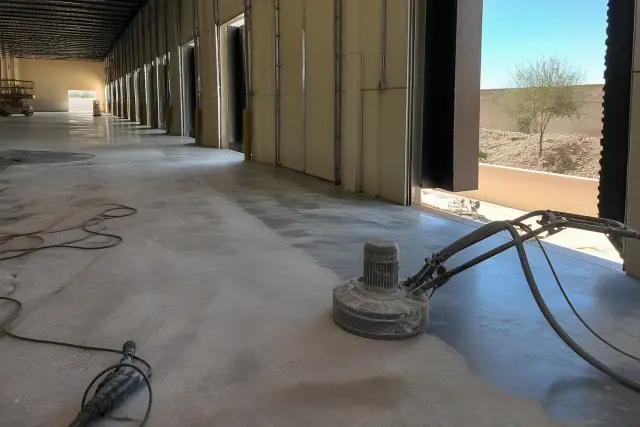
Commercial epoxy flooring preparation on a concrete slab in a Glendale, AZ warehouse with resin application tools.

Retail floors, offices, and showrooms near Arrowhead Towne Center and Westgate can use systems built for heavier foot traffic, rolling loads, daily mopping, and equipment carts. Installation can be scheduled around business hours to limit disruption.

Industrial Epoxy Flooring

Industrial epoxy flooring installation in a residential garage in Glendale, AZ with a squeegee tool nearby.

Higher-mil epoxy builds help warehouses and manufacturing floors withstand forklift traffic, chemical spills, and constant abrasion. Optional quartz or aggregate broadcasts add grip, and work can be coordinated around production schedules and shift changes.

Residential Epoxy Flooring

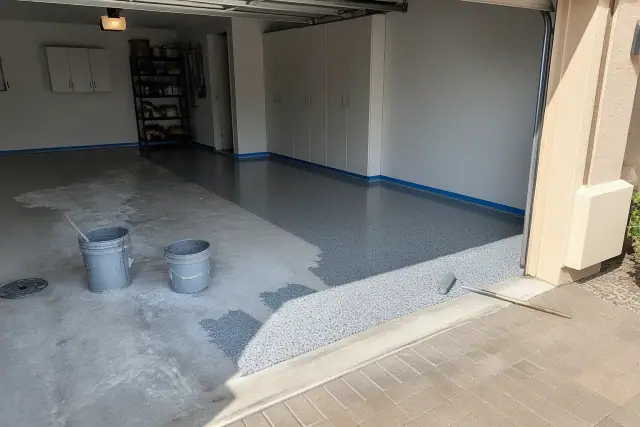
Residential epoxy flooring in progress inside a garage with tools and supplies in Glendale, AZ.

Residential systems give basements, laundry rooms, and workshops a moisture-resistant surface that is easy to clean. They stand up to pet traffic, spills, and household wear, with colors selected to complement existing finishes.

Concrete Polishing

Unfinished concrete flooring with grinding tools during a warehouse project in Glendale, AZ.

Progressive diamond grinding exposes and polishes the concrete to a satin or high-gloss sheen without an epoxy topcoat. The result is a durable, low-maintenance option for retail spaces, garages, and modern interior living areas.

Concrete Staining & Grind and Seal

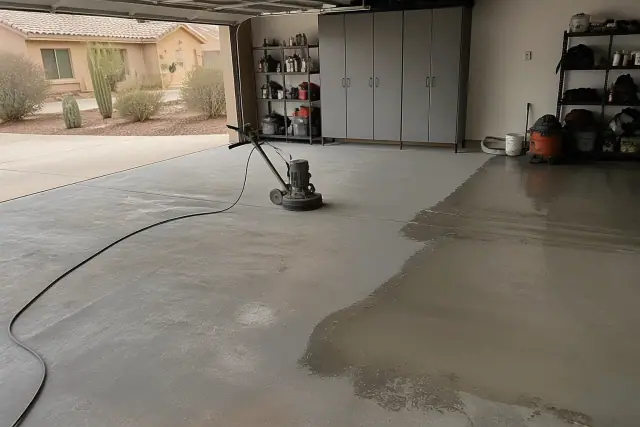
Concrete floor grinding and staining in progress at a residential garage in Glendale, AZ.

Acid- or water-based stains add color and depth, with a test section used first because the final tone varies with slab chemistry. Grind and seal pairs mechanical grinding with a penetrating sealer for basic protection and dust control in lower-traffic garages and utility spaces.

System Selection

How to Choose the Right Floor Finish in Glendale

The best floor system is the one that fits the concrete beneath it and the way the space will be used. We compare preparation needs, sunlight, moisture, traffic, finish, grip, budget, and cure time before recommending epoxy, polyaspartic, polishing, staining, or grind and seal.

Slab Preparation

Mechanical diamond grinding removes laitance and old coatings while opening concrete pores for adhesion. Acid etching alone does not create the surface profile we require for long-term bonding.

Sun Exposure

Standard epoxy can yellow under prolonged UV exposure. Polyaspartic topcoats or UV-resistant clear coats are better fits for south- and west-facing garage doors that receive direct afternoon sun.

Moisture Conditions

Moisture readings determine whether a vapor-mitigating primer is needed before the base coat. Older Glendale garages with original 1970s or 1980s concrete may require added attention when readings run high.

Traffic and Use

Daily vehicle traffic, rolling carts, forklifts, chemical exposure, and abrasion call for different coating builds. The intended use helps determine the base system, thickness, topcoat, and whether quartz or aggregate belongs in the floor.

Finish and Grip

Flake, quartz, and aggregate broadcasts can add texture and slip resistance, while metallic pigments emphasize a decorative marbled appearance. We balance visual goals with how much water, vehicle fluid, or foot traffic the floor will encounter.

Budget and Downtime

Polyaspartic coatings reduce downtime by curing in hours rather than days. For lower-traffic utility areas with tighter budgets, grind and seal can provide basic protection without the heavier build of a full epoxy system.

Glendale Floor Challenges

Common Concrete Coating Problems in Glendale

Desert heat, intense UV exposure, monsoon moisture, airborne dust, and expansive soils all affect how a coating bonds and wears. Recognizing the condition at the slab helps us choose preparation, repair, primer, texture, and topcoat details that address the actual risk.

Request Floor Evaluation

Hot-Tire Pickup

Heat trapped beneath parked tires can soften paint-grade coatings and leave ghost tire marks. Correctly selected epoxy and polyaspartic systems are built to resist hot-tire pickup under daily vehicle use.

UV Yellowing

Direct afternoon sun through an open garage door can yellow standard epoxy over time. A UV-stable polyaspartic topcoat or UV-resistant clear coat helps protect the selected color and finish.

Moisture Vapor

Monsoon humidity and occasional flash flooding can push moisture through an uncoated slab when no vapor barrier is present. We test the slab and use moisture-mitigating primer where readings require it.

Dust and Chemical Stains

Porous concrete traps haboob dust and reddish caliche while absorbing motor oil and pool chemicals. A properly cured, non-porous coating makes routine cleanup easier and resists staining.

Cracks and Slab Movement

Clay-heavy Maricopa County soils can contribute to slab movement, while older concrete may already contain cracks and worn joints. We assess those areas and use repair fillers or flexible primers suited to the condition.

Peeling and Delamination

Water-based DIY formulas commonly run 40-60% solids and can begin peeling or showing hot-tire marks within one to two years. Rushed or inadequate surface preparation is a leading cause of early delamination.

Why Choose Us

Why Choose Phoenix Epoxy Co. in Glendale?

Our crews build each installation around Glendale slab conditions rather than relying on a one-size-fits-all coating formula. We carry the licensing and insurance Arizona's Registrar of Contractors requires for concrete coating work, use products that meet relevant abrasion and chemical-exposure standards, and provide a clear scope before work begins.

Local Climate Experience

We adjust materials and cure schedules between a 115-degree July garage and a mild February installation window. That local perspective focuses on how a floor should perform after five Glendale summers, not only how it looks at handoff.

Moisture Testing and Standards

We test slab moisture before every installation and use products that meet ASTM International standards for abrasion resistance and chemical exposure. Preparation, mil thickness, and cure time follow manufacturer specifications.

Clear Scope and Accountability

The on-site evaluation leads to a written quote and clear scope based on the actual slab and selected system. We document the products used and address performance concerns directly if a floor does not perform as installed.

Installation Process

Our Epoxy Floor Installation Process in Glendale

Every project starts with the concrete rather than the coating catalog. We inspect, prepare, repair, test, install, and cure the selected system in a consistent sequence, while larger commercial projects receive any needed coordination around local permitting requirements and operating hours.

01.

Inspect and Measure

We examine the slab, existing coatings, cracks, joints, moisture levels, sun exposure, and intended traffic, then measure the square footage for an accurate written quote.

02.

Diamond-Grind the Slab

Mechanical grinding removes old coatings and laitance while opening the concrete profile for a strong bond. We do not substitute acid etching for this preparation step.

03.

Repair Cracks and Joints

Cracks and joints are cleaned and treated with fillers selected for the slab's condition and expected movement before primer or base coat is applied.

04.

Test and Mitigate Moisture

Moisture readings guide primer selection. Where vapor levels run high, we apply a moisture-mitigating primer before proceeding with the coating system.

05.

Apply the Selected System

We install the specified base coat at the proper mil thickness, then broadcast flake, quartz, aggregate, or metallic pigment when the chosen design calls for it.

06.

Topcoat, Cure, and Handoff

An epoxy or polyaspartic topcoat supplies the planned chemical and UV resistance. Most residential garage installations finish in one to three days depending on square footage and system, followed by the required final cure before full use.

Practical Outcomes

Flooring Outcomes for Glendale Homes & Businesses

Case Study 1: Garage Protection: A non-porous epoxy or polyaspartic surface resists hot-tire pickup, motor oil, coolant, pool chemicals, and embedded desert dust while remaining easier to wipe clean.

Case Study 2: Retail and Showroom Finish: Commercial epoxy, metallic finishes, or polished concrete can create a cleanable presentation surface suited to heavier foot traffic, rolling carts, and daily maintenance.

Case Study 3: Warehouse Durability: Higher-build industrial epoxy with optional quartz or aggregate supports forklift traffic, chemical exposure, abrasion, and planned installation around production schedules.

Plan Your Floor

Schedule a Glendale
Epoxy Floor
Estimate

Request a free on-site estimate to compare coating, decorative concrete, and finishing options for your property. We will inspect the slab, discuss how the space is used, and provide a written quote based on preparation, square footage, and the selected system.

Glendale Flooring Help

Garage Floor Epoxy FAQs in Glendale, AZ

These answers cover pricing, installation, finish selection, climate concerns, maintenance, coverage, and project planning for Glendale epoxy and concrete floors. A site evaluation is still the best way to match the system to the actual slab.

Call Phoenix Epoxy Co.

Professional installation in the Glendale area typically runs $5 to $10 per square foot. Premium metallic or flake systems can reach $10 to $12 per square foot, while the national professional range is $2 to $12 per square foot including labor and materials. Final pricing depends on slab condition, repairs, moisture mitigation, square footage, and material selection.

A standard two-car garage is roughly 400 to 500 square feet. At $5 to $10 per square foot, most full epoxy installations fall between $2,000 and $5,000, while premium metallic or heavier flake finishes can reach about $5,000 to $6,000. An on-site estimate accounts for the actual slab and selected system.

Epoxy can become slippery when wet unless a textured topcoat, flake, quartz, or another slip-resistant additive is included. Standard epoxy may also yellow under direct UV exposure, and poor preparation can lead to peeling or delamination. The garage must be cleared and remain out of full use during installation and cure.

Gray is the most requested base because it hides dust, tire marks, and everyday wear well in a desert setting. Charcoal and slate gray flake blends suit many residential garages, while metallic silver, bronze, or deep blue can create a more decorative showroom look. Lighting, sunlight, and actual use should guide the final choice.

A professionally installed residential epoxy floor generally lasts 10 to 20 years with normal use. Industrial and commercial floors under heavier traffic typically last 5 to 10 years before recoating is recommended. Slab preparation, mil thickness, a UV-stable topcoat, regular cleaning, and prompt attention to harsh chemical spills all affect lifespan.

Coverage depends on the selected system and project scope, so exact terms are reviewed during the estimate instead of promised broadly. The installation follows manufacturer specifications for preparation, mil thickness, and cure time, and the products used are documented for future reference. Ask about the specific coverage that applies to the recommended system.

Standard epoxy can yellow after prolonged UV exposure. Polyaspartic topcoats are more UV-stable and are recommended for garages with south- or west-facing doors, while UV-resistant clear coats are another option for selected epoxy finishes. Sun exposure is reviewed during the estimate before a topcoat is recommended.

Most residential garage installations are completed in one to three days, depending on square footage, repairs, moisture needs, and the system selected. Polyaspartic topcoats can allow a faster return to service than standard epoxy. The floor still needs the specified final cure before full use.

Diamond grinding removes existing coatings and laitance while opening the concrete pores for a mechanical bond. Acid etching alone does not create the surface profile used for long-term adhesion. Skipping or rushing this step is a common reason coatings fail early.

Yes. The slab is tested before installation, and moisture-mitigating primer is used where readings run high. This is especially important in older concrete and where monsoon humidity or water intrusion may drive vapor upward.

Glendale slab surfaces regularly exceed 140°F while ambient highs push past 110°F. Correctly selected epoxy and polyaspartic systems resist hot-tire pickup better than paint-grade coatings, and UV-stable topcoats help where direct sunlight reaches the floor. Material choice and cure scheduling are adjusted to the installation conditions.

Options are available for residential garages, basements, laundry rooms, workshops, patios, and interior living areas. Commercial systems suit retail floors, offices, and showrooms, while higher-build industrial systems address warehouses and manufacturing floors. Polishing, staining, and grind and seal provide alternatives where a full coating is not the preferred finish.

Service extends across Arrowhead Ranch, Sahuaro Ranch, Historic Downtown Glendale, Coyote Country, Stetson Hills, and the areas around State Farm Stadium and Westgate Entertainment District. Nearby coverage includes Peoria, Surprise, Litchfield Park, El Mirage, and Sun City. Crews also travel to Phoenix, Avondale, Goodyear, and Tolleson for qualifying residential, commercial, and industrial projects.

Epoxy provides a durable base with strong chemical resistance and supports flake or metallic designs. Polyaspartic coatings cure faster, work across a wider temperature range, and resist UV yellowing better than standard epoxy. A polyaspartic topcoat is often paired with an epoxy base where faster return to service or direct sun exposure matters.

Most residential garage epoxy work in Glendale does not require a separate permit. Larger commercial floor coating projects may involve local permitting requirements, and any needed coordination is discussed before installation. The project scope determines whether that step applies.