Garage Floor Epoxy
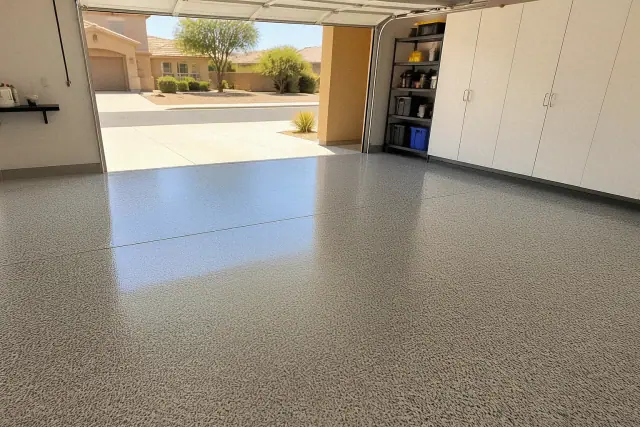
A two-part epoxy resin base coat bonds to mechanically prepared concrete, then receives a protective topcoat for resistance to hot-tire pickup, road-salt residue, and oil drips. Explore Service.
Explore Service
Phoenix Epoxy Co. installs garage floor epoxy and garage floor coatings for Gilbert homes and businesses. Our systems include polyaspartic coatings, epoxy flake flooring, and metallic epoxy flooring. We also provide commercial, industrial, and residential epoxy flooring, along with concrete polishing, staining, and grind-and-seal finishes. Every option is matched to the slab, traffic, and finish goals discussed during the on-site evaluation.
Unshaded concrete in Gilbert can exceed 140 degrees during summer, while monsoon moisture and expansive clay soils add stress below the surface. Those conditions contribute to hot-tire pickup, hairline cracking, dusting concrete, and moisture-vapor concerns. We diamond-grind each slab, test moisture levels, and repair cracks before applying the selected coating system. Our licensed and insured team chooses epoxy and polyaspartic materials for adhesion, chemical resistance, heat performance, and UV stability.
Gilbert had a 2025 population of 287,285, creating a mix of untreated new-construction slabs and older garage floors across the town. Request a free on-site evaluation and written quote before scheduling work.
Choose from resin coatings, decorative finishes, polished concrete, or grind-and-seal systems suited to garages, patios, retail floors, showrooms, warehouses, and interior concrete. For another supported East Valley service area, review our flooring options in Tempe, AZ .
A two-part epoxy resin base coat bonds to mechanically prepared concrete, then receives a protective topcoat for resistance to hot-tire pickup, road-salt residue, and oil drips. Explore Service.
Explore Service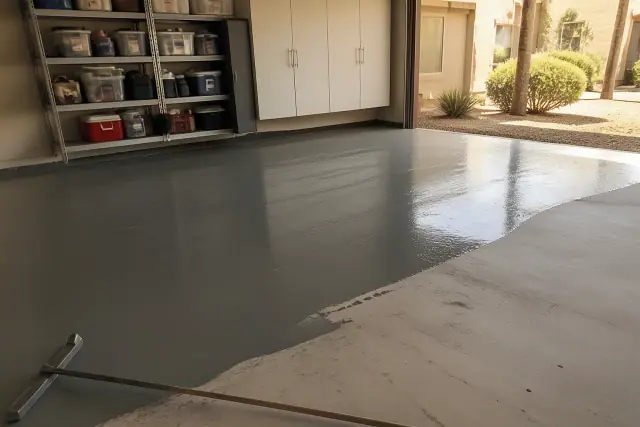
We match the coating build to the slab, garage-use pattern, and desired finish, using grinding, repairs, a bonded base coat, and a protective topcoat as the project requires. Explore Service.
Explore Service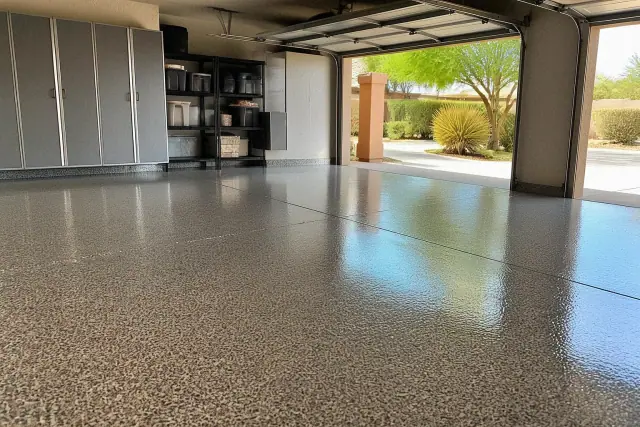
Polyaspartic coatings cure in hours rather than days and resist UV yellowing better than standard epoxy, making them useful for fast-cure projects and sun-exposed surfaces. Explore Service.
Explore Service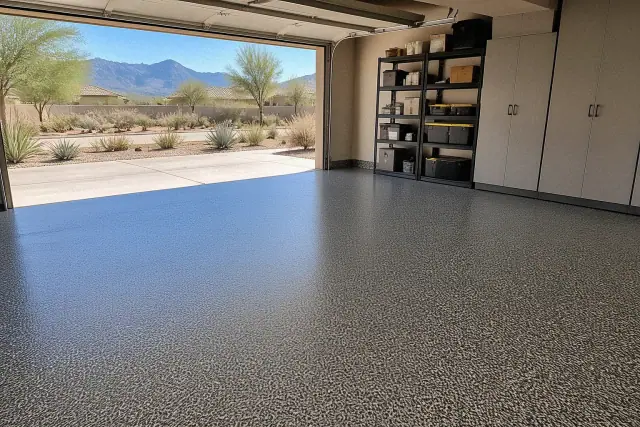
Colored vinyl flakes broadcast into the base coat add texture, help hide slab imperfections, and improve slip resistance. The finish suits Gilbert garages used as workshops or home gyms and handles foot traffic and rolling tool chests.
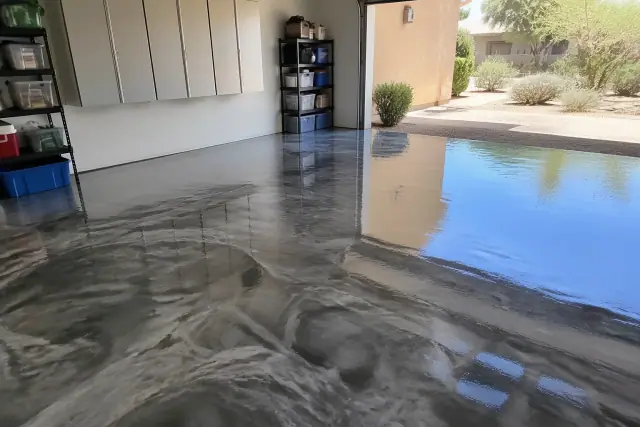
Metallic pigments create a unique three-dimensional, marbled appearance for showroom garages, custom homes, and high-end patios. Each pour produces a distinctive decorative finish rather than a uniform flake pattern.
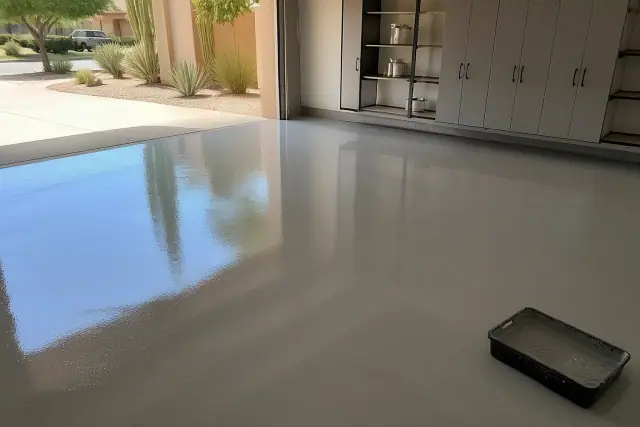
Commercial systems are sized for daily foot traffic and the downtime limits of retail floors, showrooms, and offices. Installation can be scheduled around business hours along Gilbert retail corridors such as Val Vista Drive.
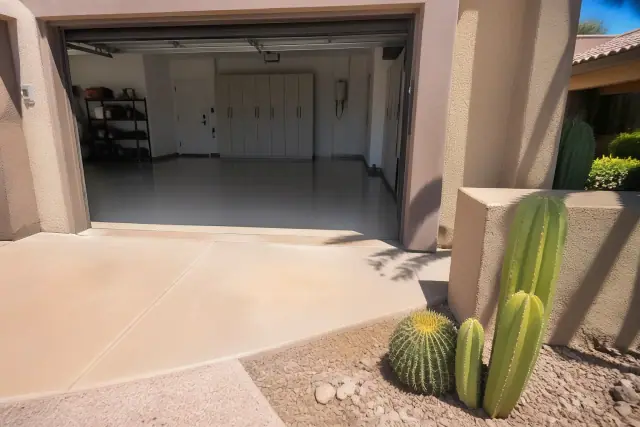
Heavy-load, chemical-resistant epoxy is designed for forklift traffic, oil, coolant, cleaning agents, and continuous operations. These systems serve warehouses, manufacturing floors, and light-industrial properties near the Gilbert Municipal Airport corridor.
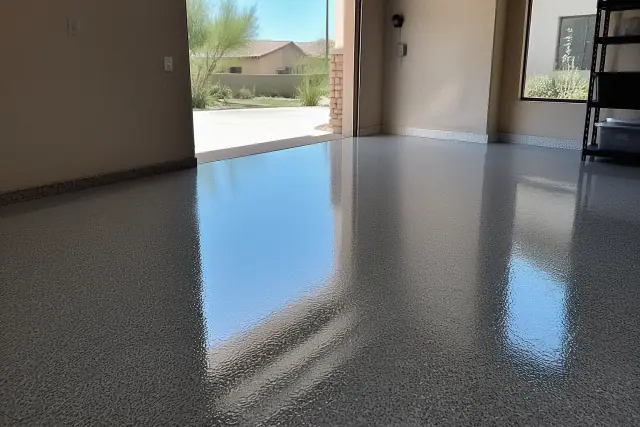
Residential epoxy provides an easy-clean surface for garages, patios, basements, and interior concrete. The coating build can be adapted for Arizona dust, kids, pets, vehicle use, and outdoor UV exposure where relevant.
Progressively finer diamond grits bring concrete to a glossy, low-maintenance finish for showrooms and modern interiors. Polishing resists everyday staining and removes the need for waxing.
Acid- or water-based stains create variegated, natural-stone-like color for patios, pool decks, and other concrete. Grind and seal instead pairs mechanical grinding with a penetrating sealer for a lower-cost, low-sheen finish in garages and utility spaces.
The right system depends on sun exposure, cure time, traction, appearance, traffic, chemicals, and budget. Comparing those factors after the slab evaluation helps narrow the choice without sacrificing the preparation needed for durable adhesion.
Polyaspartic topcoats and high-build epoxy formulations are selected for high-heat performance and UV exposure. Sun-exposed patios and garage entrances need better yellowing resistance than fully shaded interior floors.
Polyaspartic coatings cure in hours rather than days, which can reduce interruption for a garage or business. Standard epoxy layers require full cure before the next stage, so the chosen system should fit the available schedule.
Broadcast vinyl flakes add texture, conceal minor visual imperfections, and improve traction for workshops, home gyms, and busy garages. The final texture should also account for rolling tool chests and how the floor will be cleaned.
Flake flooring provides a consistent chip blend, while metallic pigments create a unique marbled effect. Concrete staining offers natural variation, and polishing reveals the slab itself with a glossy finish.
Residential garages need resistance to tires, oil drips, and Arizona dust, while warehouses may require protection from forklifts, coolant, cleaning agents, and continuous operation. The system build should reflect the actual load rather than appearance alone.
National professional installation ranges from $2 to $12 per square foot, with labor typically accounting for $4 to $9 per square foot and materials adding $2 to $6 per square foot depending on flake density and topcoat. A written Gilbert quote itemizes preparation, repairs, materials, and coats, since thin single-coat options are more vulnerable to local heat and UV exposure.
Heat cycling, slab movement, moisture vapor, stored chemicals, weak surface preparation, and direct sunlight can each shorten a coating's life. Identifying the cause before choosing a resin or finish helps prevent a cosmetic cover-up of an underlying concrete problem.
Request a Slab EvaluationGilbert receives over 300 days of sunshine annually, and unshaded concrete can climb well past 140 degrees. The wrong resin can soften beneath hot tires and retain permanent impressions.
Expansive clay and caliche conditions can move concrete differently from sandier parts of the Valley. Hairline cracks, spalling, and stressed control joints need repair before a coating is applied.
Acid etching alone does not create the open concrete profile produced by diamond grinding. Proper mechanical preparation can separate a floor that lasts 10 to 20 years from one that peels within two years.
Monsoon humidity can expose vapor transmission through slabs that were not properly cured. Moisture testing identifies readings that may require a vapor-mitigating primer before the base coat.
Bare concrete readily absorbs motor oil, fertilizer, pool chemicals, coolant, and cleaning agents. The coating formulation must match the chemical exposure expected in a garage, shop, or warehouse.
Standard epoxy can discolor where intense sunlight reaches the floor. A UV-stable polyaspartic topcoat is often the better fit for outdoor concrete and sunlit garage thresholds.
Phoenix Epoxy Co. is a licensed and insured epoxy flooring contractor that follows Arizona Registrar of Contractors requirements. Crews are trained on epoxy and polyaspartic systems that meet ASTM International testing standards for abrasion resistance and adhesion, and every project receives the same preparation standard regardless of size.
Experience across established neighborhoods and master-planned communities informs how the team approaches heat, monsoon moisture, caliche, expansive clay, and HOA aesthetic guidelines. Work is also sized around Town of Gilbert Building Division permit and inspection processes when applicable.
The crew tests moisture levels before every installation instead of assuming a slab is ready. Readings above acceptable thresholds are addressed with vapor-mitigating primers before the selected coating build begins.
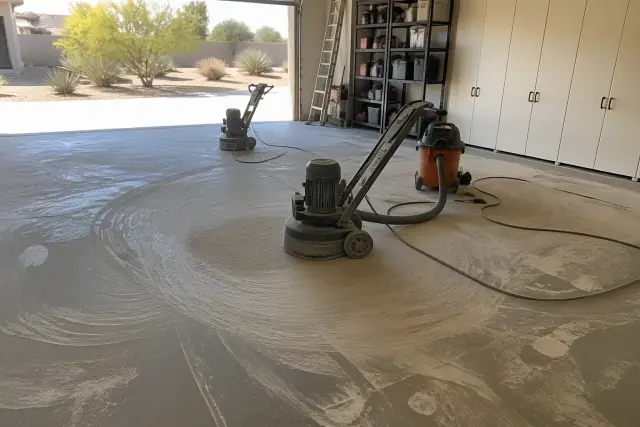
Mechanical grinding removes sealers, laitance, and contamination down to bare concrete. Cracks, spalling, and control joints are then patched with polyurea or epoxy filler to create a sound surface for adhesion.
Every project follows the same four-stage core installation process: concrete grinding, repairs and surface treatment, epoxy base coat application, and the selected flake or finish coat. The evaluation and finish selection below show how the crew prepares for and completes those stages.
An on-site evaluation documents square footage, slab condition, cracks, contamination, moisture readings, traffic, sun exposure, and finish goals. Those findings support a written, itemized quote before scheduling.
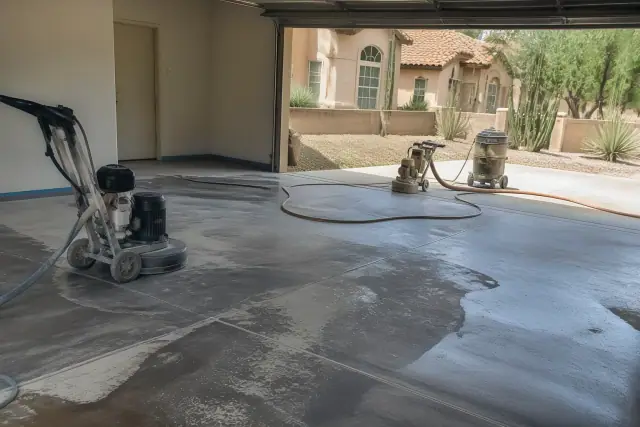
Diamond-grinding equipment mechanically profiles the surface and removes sealers, laitance, and contamination. This exposes bare concrete for dependable resin adhesion.
Cracks, spalling, and control joints are patched with polyurea or epoxy filler. If moisture readings are high, a vapor-mitigating primer is added before coating.
A 100% solids epoxy base coat is rolled at the proper mil thickness for adhesion and durability. It is allowed to cure fully before the finish stage.
The selected system may receive colored vinyl flakes for texture and slip resistance or metallic pigments for a marbled appearance. Other projects can move directly to the protective topcoat.
The final topcoat supplies chemical resistance, the chosen texture, and long-term UV stability where needed. The coating is then left to cure according to the installed resin system.
Case Study 1: Residential garages: Systems scale from single-bay garages in established neighborhoods to three- and four-car garages near Cooley Station, with flake or metallic finishes selected for durability and custom color.
Case Study 2: Commercial and industrial floors: Chemical-resistant coatings handle heavier loads while overnight or weekend scheduling limits disruption. Polyaspartic systems allow many spaces to reopen within 24 to 48 hours rather than the week-long cure times older epoxy systems required.
Case Study 3: Showrooms, patios, and interiors: Polished concrete provides a glossy, low-maintenance surface, while staining, metallic epoxy, and grind-and-seal finishes offer different combinations of color, sheen, and protection.
Request a slab evaluation for your Gilbert garage, patio, showroom, retail floor, warehouse, or interior concrete. Phoenix Epoxy Co. will review surface condition, preparation needs, traffic, exposure, and finish options, then provide a written quote before work is scheduled.
Compare cost ranges, preparation, coating types, cure time, durability, repairs, and service coverage before choosing a Gilbert floor system. Call the flooring team if your slab has unusual moisture, cracking, chemical exposure, or downtime requirements.
Call Our Flooring TeamNationally, professional epoxy installation averages $7.78 to $12.71 per square foot. Basic systems can be as low as $2 per square foot, while premium polyaspartic or metallic work can reach $12 or more. A Gilbert quote is based on square footage, slab condition, repair needs, moisture mitigation, and the selected system.
A typical Arizona two-car garage is 400 to 500 square feet and runs between $1,700 and $3,300 for a full epoxy system when minimal crack repair is needed. The written quote changes with slab condition, flake density, topcoat selection, and other preparation requirements.
Polyaspartic coatings cure in hours rather than days, and many coated spaces can reopen within 24 to 48 hours. Exact scheduling depends on the system, required slab repairs, and business downtime restrictions.
Diamond grinding is the main preparation factor separating a floor that can last 10 to 20 years from one that may peel within two years. Actual performance still depends on slab condition, moisture, system selection, exposure, traffic, and use.
Diamond grinding mechanically removes sealers, laitance, and contamination while opening the concrete profile for adhesion. Acid etching alone can leave a weaker surface profile, which increases the risk of early peeling.
Epoxy provides a durable bonded base and supports flake or metallic finishes. Polyaspartic coatings cure faster and resist UV yellowing better, so they are often used as topcoats or for sun-exposed surfaces. The choice depends on exposure, downtime, appearance, and traffic.
High-build epoxy and polyaspartic formulations are selected for high-heat performance and UV exposure. Correct resin choice matters because standard epoxy can temporarily soften under hot tires and retain indentations.
Yes. Moisture levels are tested before every installation rather than assuming the slab is ready. Readings above acceptable thresholds can require a vapor-mitigating primer before the base coat.
Cracks, spalling, and control joints are addressed after grinding with polyurea or epoxy filler. Repairing those areas before the base coat creates a more suitable surface for the selected coating system.
Yes. Broadcast vinyl chips add texture, help hide imperfections, and improve slip resistance. The finish also handles foot traffic and rolling tool chests common in multipurpose garages.
Metallic pigments form a unique three-dimensional, marbled appearance suited to showroom garages, custom homes, and high-end patios. Flake flooring uses colored vinyl chips for a more consistent texture, added traction, and visual coverage of slab imperfections.
Commercial epoxy supports daily foot traffic in retail, showroom, and office settings. Heavy-load industrial systems are built for forklift traffic, chemical spills, oil, coolant, cleaning agents, and continuous operations. Polished concrete and grind-and-seal finishes are also available where appearance and maintenance needs lead the decision.
Yes. Residential services include patios, basements, interior concrete, and other surfaces in addition to garages. Concrete staining can add natural-looking color to patios and pool decks, while resin systems are adapted for outdoor UV exposure where relevant.
Service covers Morrison Ranch, Power Ranch, Val Vista Lakes, Seville, Trilogy at Power Ranch, Layton Lakes, Cooley Station, and the Heritage District. Regular East Valley coverage also includes Chandler, Mesa, Queen Creek, San Tan Valley, Higley, Tempe, Scottsdale, and surrounding Maricopa County communities for larger commercial and industrial projects.
The team reviews square footage, slab condition, cracks, contamination, moisture, traffic, exposure, and finish goals. You then receive a written, itemized quote showing the preparation, materials, and coats included before work is scheduled.