Choose a Flake Size
Fine 1/16-inch flakes create a low-profile, speckled look, 1/8-inch flakes balance coverage with natural-stone texture, and 1/4-inch flakes show more individual-chip dimension.
Phoenix Epoxy Co. installs flake systems throughout the Phoenix metro, where the right chip size, color blend, and finish affect both appearance and performance. Epoxy flakes range from fine 1/16-inch chips to bold 1-inch broadcasts, with solid, metallic, brindle, and hybrid blends suited to different design goals and traffic levels.
Fine 1/16-inch flakes create a low-profile, speckled look, 1/8-inch flakes balance coverage with natural-stone texture, and 1/4-inch flakes show more individual-chip dimension.
Solid flakes create a consistent field; metallic effects add depth and shimmer; brindle blends mimic natural stone; and multi-size, multicolor hybrids can resemble granite or terrazzo. Neon, glitter-infused, and glow-in-the-dark flakes are decorative options for specialty spaces.
Fine flakes lie flatter beneath the topcoat for kitchens, offices, and retail areas, while coarse, heavier flakes create more grip for industrial floors exposed to forklifts and heavy equipment.
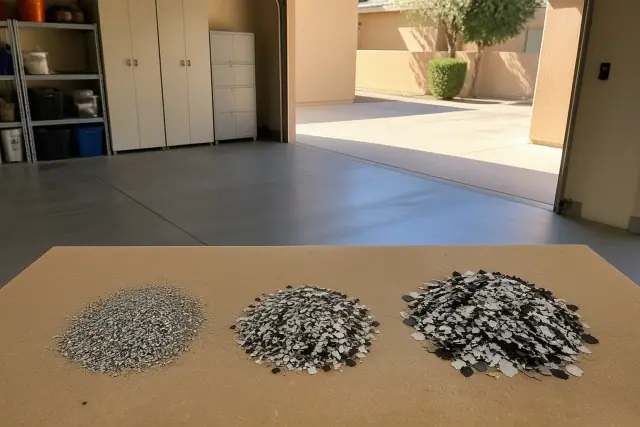
Viewing these three sizes side by side makes the change from subtle speckle to bold chip texture easier to judge before selecting a broadcast.
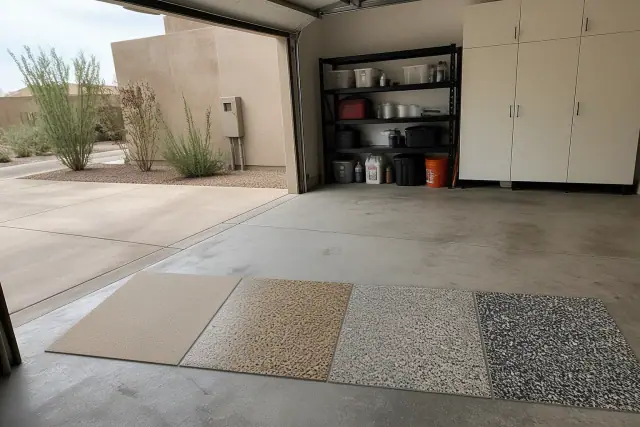
Comparing these finishes under similar lighting reveals how each changes color uniformity, depth, and natural-looking variation.
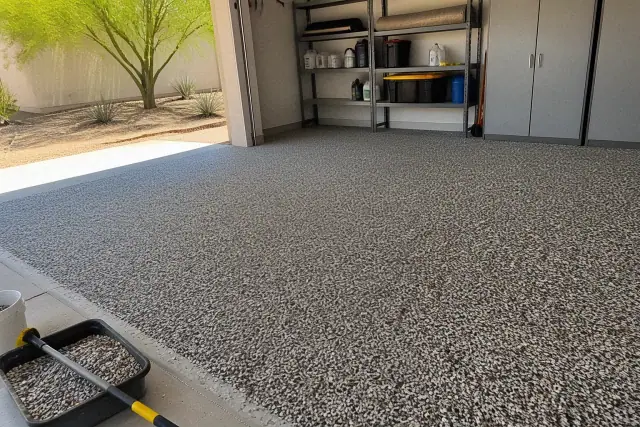
This stage reveals whether coverage is even and shows why loose chips must be scraped and vacuumed before the sealing topcoat.
The 1/8-inch flake is the most requested residential garage size because it offers visible texture and efficient full-broadcast coverage without looking overly busy.
A full-refusal broadcast maximizes chip coverage, while a partial decorative broadcast leaves more of the pigmented base coat visible.
The clear topcoat determines whether the completed system has a matte, semi-gloss, or high-gloss finish; low-VOC flake and base systems are also available for indoor-air concerns during cure.
A polyaspartic topcoat cures faster than standard epoxy and better resists intense summer heat and UV exposure entering through garage doors.
| Flake Size | Visual Effect | Common Fit |
|---|---|---|
| 1/16 inch | Fine, subtle, and uniform | Commercial floors and easier-clean surfaces |
| 1/8 inch | Balanced, natural-stone texture | The most popular size for garage floors |
| 1/4 inch | Bold chips with visible dimension | Residential garages and patios |
| Up to 1 inch | Large, dramatic broadcast | Design-led specialty spaces |
A flake floor is a layered system rather than loose chips mixed into paint. After diamond grinding and moisture-vapor testing, a primer and pigmented 100% solids epoxy base coat create the foundation; vinyl or acrylic chips are then broadcast at a partial decorative rate or to full refusal. Once cured, excess chips are scraped and vacuumed before a clear epoxy or polyaspartic topcoat seals the surface. Moisture testing matters in low-lying Phoenix areas where a high water table can affect adhesion.
A properly installed flake system with a polyaspartic topcoat can last 10 years or more under normal residential use. The textured, multilayer surface resists oil, antifreeze, common chemicals, impacts, and hot-tire pickup while improving footing when monsoon-season water is tracked inside. Those traits matter where unshaded garage surfaces can rise well above 120°F and pavement temperatures regularly exceed 140°F. Faster-curing polyaspartic systems may allow foot traffic within 24 hours and vehicle traffic within days, depending on the project.
Flake flooring costs more than plain epoxy because it adds a chip broadcast, scrape, and topcoat: installed flake systems generally run $5 to $10 per square foot, compared with $3 to $5 for plain epoxy, while a one-car garage typically runs $1,300 to $1,750. Full flake kits for smaller spaces up to 600 square feet generally start around $1,000. Plain epoxy uses one or two solid-color coats, while flake systems add texture and depth; broader coating categories include thin films around 4 to 30 mils, slurries around 30 to 250 mils, and mortar systems at 125 mils or more. Professional preparation is not the only way to install a kit, but diamond grinding, moisture testing, and precise coat thickness help prevent uneven broadcasts, visible roller lines, and premature peeling.
Share how the space is used, the condition of the concrete, preferred colors, and desired texture. A local installer can recommend a flake size, broadcast rate, and topcoat for a garage, patio, showroom, or warehouse.